
Novogene AMEA
  • Novogene AMEA
  • Genomics
    • Human Whole Genome Sequencing
    • Plant and Animal Whole Genome Sequencing
    • Microbial Whole Genome Sequencing
    • Plant and Animal De novo Sequencing
    • Microbial De novo Sequencing
    • Shotgun Metagenomics Sequencing
    • Amplicon Sequencing
    • Whole Exome Sequencing
    Transcriptomics
    • mRNA Sequencing
    • Total RNA Sequencing
    • Full-Length Transcriptome Sequencing
    • Whole Transcriptome Sequencing
    • Small RNA Sequencing
    • Circular RNA Sequencing
    • Metatranscriptome Sequencing
    • Prokaryotic RNA Sequencing
    Single Cell & Spatial Omics
    • Single Cell Gene Expression
    • Single Cell Immune Profiling Sequencing
    • Single Cell Long Read Transcriptome
    • Visium HD Spatial Gene Expression
    • Stereo-Seq Spatial Gene Expression
    • Xenium In Situ Spatial Transcriptome
    Epigenomics
    • Whole Genome Bisulfite Sequencing (WGBS)
    • Directed DNA Methylation Sequencing (DM-Seq) NEW
    • Reduced Representation Bisulfite Sequencing (RRBS)
    • Chromatin Immunoprecipitation Sequencing (ChIP-seq)
    • RNA Immunoprecipitation Sequencing (RIP-seq)
    • Assay for Transposase-Accessible Chromatin with Sequencing (ATAC-seq)

    Premade Library

    • Sequencing Only on Illumina Sequencer
    • Sequencing Only on PacBio Sequencer
    Proteomics and Metabolomics
    • Olink Proteomics
    • Quantitative Proteomics
    • Untargeted Metabolomics
  • PromotionsPromotions
    • Platforms
    • Automated Delivery Platform (Falcon)
    • Bioinformatics Analysis Tool (NovoMagic)
    • Customer Service System (CSS)
    • Brochures
    • Case Studies
    • Webinar
    • Blog
    • Sample Guidelines
    • Cancer Research
    • Immuno-oncology
    • Agrigenomics
    • Environment
    • Food Science
    • Human Microbiome
    • Plant and Animal Microbiome
    • Drug Discovery and Development
    • Rare and Complex Diseases
    • About Us
    • Our Locations
    • News
    • Careers
  • Contact UsContact Us

ServicesServices menu

SupportSupport menu

CompanyCompany menu

Services
Whole Genome SequencingDe novo SequencingAmplicon SequencingShotgun Metagenomic SequencingDirected DNA Methylation Sequencing (DM-Seq)mRNA SequencingSingle Cell Gene ExpressionVisium HD Spatial Gene ExpressionXenium In Situ Spatial TranscriptomeOlink ProteomicsUntargeted Metabolomics
Support
NovoMagic Bioinformatics Analysis ToolCustomer Service SystemFalcon Intelligent Delivery Platform
Company
About UsOur LocationsOur PlatformsNewsCareersContact Us
LinkedInLinkedIn hoverYouTubeYouTube hoverXX hover
Copyright © 2026 Novogene Inc. All rights reserved.For Research Use Only. Not for Clinical Diagnostic Use.
Novogene AMEA
  • Novogene AMEA
  • Genomics
    • Human Whole Genome Sequencing
    • Plant and Animal Whole Genome Sequencing
    • Microbial Whole Genome Sequencing
    • Plant and Animal De novo Sequencing
    • Microbial De novo Sequencing
    • Shotgun Metagenomics Sequencing
    • Amplicon Sequencing
    • Whole Exome Sequencing
    Transcriptomics
    • mRNA Sequencing
    • Total RNA Sequencing
    • Full-Length Transcriptome Sequencing
    • Whole Transcriptome Sequencing
    • Small RNA Sequencing
    • Circular RNA Sequencing
    • Metatranscriptome Sequencing
    • Prokaryotic RNA Sequencing
    Single Cell & Spatial Omics
    • Single Cell Gene Expression
    • Single Cell Immune Profiling Sequencing
    • Single Cell Long Read Transcriptome
    • Visium HD Spatial Gene Expression
    • Stereo-Seq Spatial Gene Expression
    • Xenium In Situ Spatial Transcriptome
    Epigenomics
    • Whole Genome Bisulfite Sequencing (WGBS)
    • Directed DNA Methylation Sequencing (DM-Seq) NEW
    • Reduced Representation Bisulfite Sequencing (RRBS)
    • Chromatin Immunoprecipitation Sequencing (ChIP-seq)
    • RNA Immunoprecipitation Sequencing (RIP-seq)
    • Assay for Transposase-Accessible Chromatin with Sequencing (ATAC-seq)

    Premade Library

    • Sequencing Only on Illumina Sequencer
    • Sequencing Only on PacBio Sequencer
    Proteomics and Metabolomics
    • Olink Proteomics
    • Quantitative Proteomics
    • Untargeted Metabolomics
  • PromotionsPromotions
    • Platforms
    • Automated Delivery Platform (Falcon)
    • Bioinformatics Analysis Tool (NovoMagic)
    • Customer Service System (CSS)
    • Brochures
    • Case Studies
    • Webinar
    • Blog
    • Sample Guidelines
    • Cancer Research
    • Immuno-oncology
    • Agrigenomics
    • Environment
    • Food Science
    • Human Microbiome
    • Plant and Animal Microbiome
    • Drug Discovery and Development
    • Rare and Complex Diseases
    • About Us
    • Our Locations
    • News
    • Careers
  • Contact UsContact Us

ServicesServices menu

SupportSupport menu

CompanyCompany menu

Services
Whole Genome SequencingDe novo SequencingAmplicon SequencingShotgun Metagenomic SequencingDirected DNA Methylation Sequencing (DM-Seq)mRNA SequencingSingle Cell Gene ExpressionVisium HD Spatial Gene ExpressionXenium In Situ Spatial TranscriptomeOlink ProteomicsUntargeted Metabolomics
Support
NovoMagic Bioinformatics Analysis ToolCustomer Service SystemFalcon Intelligent Delivery Platform
Company
About UsOur LocationsOur PlatformsNewsCareersContact Us
LinkedInLinkedIn hoverYouTubeYouTube hoverXX hover
Copyright © 2026 Novogene Inc. All rights reserved.For Research Use Only. Not for Clinical Diagnostic Use.
banner laptop bg
banner mobile bg

Quantitative Proteomics

Quantitative profiling of protein abundance to reveal differential expression and support studies of biological processes and disease mechanisms.
Request a Quote
(Quantitative Proteomics)
Request a Quote
(Quantitative Proteomics)
OverviewOverview
BenefitsBenefits
ApplicationsApplications
SpecificationsSpecifications
ResourcesResources

Proteomics reveals functional biology by directly quantifying proteins, enabling deeper insights into disease mechanisms and biomarker discovery beyond genomic predictions.


Leveraging library-free DIA on the Thermo Orbitrap Astral platform, Novogene delivers next-generation quantitative proteomics with superior data completeness, depth, and reproducibility — without missing values or DDA libraries.


Choose Rapid DIA for high-throughput studies or Deep DIA for comprehensive proteome coverage, both designed to accelerate confident biological discovery.

Why Choose Novogene for Your Proteomics Needs?

End-to-End Workflow
End-to-End Workflow

From sample preparation to LC-MS/MS analysis and expert data interpretation, we deliver a fully integrated proteomics solution.

End-to-End Workflow
End-to-End Workflow

From sample preparation to LC-MS/MS analysis and expert data interpretation, we deliver a fully integrated proteomics solution.

Scalable High-Throughput Performance

Our automated platform supports large cohort studies, processing up to 180 samples per day while identifying over 8,000 proteins.

Scalable High-Throughput Performance

Our automated platform supports large cohort studies, processing up to 180 samples per day while identifying over 8,000 proteins.

Flexible Study Design

Detection depth and acquisition time can be tailored to match your specific research objectives.

Flexible Study Design

Detection depth and acquisition time can be tailored to match your specific research objectives.

Seamless Multi-Omics Integration

Easily connect proteomics with genomics, transcriptomics, and metabolomics for deeper, systems-level insights.

Seamless Multi-Omics Integration

Easily connect proteomics with genomics, transcriptomics, and metabolomics for deeper, systems-level insights.

Proven Experience at Scale

With 200,000+ samples processed across 250+ species and 300+ sample types, our expertise translates into reliable results.

Proven Experience at Scale

With 200,000+ samples processed across 250+ species and 300+ sample types, our expertise translates into reliable results.

Advanced Platform
Advanced Platform

Powered by the Thermo Orbitrap Astral platform, our quantitative proteomics delivers high resolution, ultra sensitivity, and exceptional throughput.

Advanced Platform
Advanced Platform

Powered by the Thermo Orbitrap Astral platform, our quantitative proteomics delivers high resolution, ultra sensitivity, and exceptional throughput.

Why Choose Novogene for Your Proteomics Needs?

End-to-End Workflow
End-to-End Workflow

From sample preparation to LC-MS/MS analysis and expert data interpretation, we deliver a fully integrated proteomics solution.

End-to-End Workflow
End-to-End Workflow

From sample preparation to LC-MS/MS analysis and expert data interpretation, we deliver a fully integrated proteomics solution.

Scalable High-Throughput Performance

Our automated platform supports large cohort studies, processing up to 180 samples per day while identifying over 8,000 proteins.

Scalable High-Throughput Performance

Our automated platform supports large cohort studies, processing up to 180 samples per day while identifying over 8,000 proteins.

Flexible Study Design

Detection depth and acquisition time can be tailored to match your specific research objectives.

Flexible Study Design

Detection depth and acquisition time can be tailored to match your specific research objectives.

Seamless Multi-Omics Integration

Easily connect proteomics with genomics, transcriptomics, and metabolomics for deeper, systems-level insights.

Seamless Multi-Omics Integration

Easily connect proteomics with genomics, transcriptomics, and metabolomics for deeper, systems-level insights.

Proven Experience at Scale

With 200,000+ samples processed across 250+ species and 300+ sample types, our expertise translates into reliable results.

Proven Experience at Scale

With 200,000+ samples processed across 250+ species and 300+ sample types, our expertise translates into reliable results.

Advanced Platform
Advanced Platform

Powered by the Thermo Orbitrap Astral platform, our quantitative proteomics delivers high resolution, ultra sensitivity, and exceptional throughput.

Advanced Platform
Advanced Platform

Powered by the Thermo Orbitrap Astral platform, our quantitative proteomics delivers high resolution, ultra sensitivity, and exceptional throughput.

Applications

Discover the power of quantitative proteomics with Novogene’s services, designed to assist in a variety of research goals:

Deep Protein Profiling

Bridge discovery and validation through detailed protein characterization.

Deep Protein Profiling

Bridge discovery and validation through detailed protein characterization.

Drug Discovery & Biomarker

Identify verifiable drug targets and actionable diagnostic markers with high-quality, reproducible data.

Drug Discovery & Biomarker

Identify verifiable drug targets and actionable diagnostic markers with high-quality, reproducible data.

Function & Mechanism

Go beyond lists of proteins to discover true function and regulation within biological systems.

Function & Mechanism

Go beyond lists of proteins to discover true function and regulation within biological systems.

Agriculture & Sustainability

Develop crops and understand environmental impacts with precision proteomics.

Agriculture & Sustainability

Develop crops and understand environmental impacts with precision proteomics.

Applications

Discover the power of quantitative proteomics with Novogene’s services, designed to assist in a variety of research goals:

Deep Protein Profiling

Bridge discovery and validation through detailed protein characterization.

Deep Protein Profiling

Bridge discovery and validation through detailed protein characterization.

Drug Discovery & Biomarker

Identify verifiable drug targets and actionable diagnostic markers with high-quality, reproducible data.

Drug Discovery & Biomarker

Identify verifiable drug targets and actionable diagnostic markers with high-quality, reproducible data.

Function & Mechanism

Go beyond lists of proteins to discover true function and regulation within biological systems.

Function & Mechanism

Go beyond lists of proteins to discover true function and regulation within biological systems.

Agriculture & Sustainability

Develop crops and understand environmental impacts with precision proteomics.

Agriculture & Sustainability

Develop crops and understand environmental impacts with precision proteomics.

Specifications

Sample Requirements

Sample amounts are listed for reference only. Download the Sample Requirements to learn more. For detailed information, please contact us with your customized requests.

Sample Type* Sample Amount
Human Plasma/SerumNeat
(no high abundant protein depletion procedure)
5 μL
High-abundance protein depletion for human blood
(affinity-based)
10 μL
Animal TissueSoft tissue
(brain, heart, liver, spleen, lung, kidney, muscle, etc.)
10 mg
Hard tissue
(hair, cartilage, etc.)
200 mg
Suspension/adherent cultured cells
(it is crucial to meet the required cell pellet volume)
2×10^6
(10 μL cell pellet)
Body Fluids
(most body fluids contain large amount of proteins, so undiluted sample is preferred)
Cerebrospinal fluid/Semen/ Follicular Fluid/Saliva/Tear500 μL
Urine10 mL
Breast milk10 μL
Extracted protein sample
(solvent buffer reagent components must be provided)
Non-detergent containing protein sample (optimal buffer with 6M Urea, preferred protein concentration ≥ 0.5 μg/μL)100 μg
Detergent containing protein sample
(including SDS, triton X-100, NP40, CHAPS, etc.)
200 μg
*Please contact us for more information.

Sample Requirements

Sample amounts are listed for reference only. Download the Sample Requirements to learn more. For detailed information, please contact us with your customized requests.

Sample Type* Sample Amount
Human Plasma/SerumNeat
(no high abundant protein depletion procedure)
5 μL
High-abundance protein depletion for human blood
(affinity-based)
10 μL
Animal TissueSoft tissue
(brain, heart, liver, spleen, lung, kidney, muscle, etc.)
10 mg
Hard tissue
(hair, cartilage, etc.)
200 mg
Suspension/adherent cultured cells
(it is crucial to meet the required cell pellet volume)
2×10^6
(10 μL cell pellet)
Body Fluids
(most body fluids contain large amount of proteins, so undiluted sample is preferred)
Cerebrospinal fluid/Semen/ Follicular Fluid/Saliva/Tear500 μL
Urine10 mL
Breast milk10 μL
Extracted protein sample
(solvent buffer reagent components must be provided)
Non-detergent containing protein sample (optimal buffer with 6M Urea, preferred protein concentration ≥ 0.5 μg/μL)100 μg
Detergent containing protein sample
(including SDS, triton X-100, NP40, CHAPS, etc.)
200 μg
*Please contact us for more information.

Sample Requirements

Sample amounts are listed for reference only. Download the Sample Requirements to learn more. For detailed information, please contact us with your customized requests.

Sample Type* Sample Amount
Human Plasma/SerumNeat
(no high abundant protein depletion procedure)
5 μL
High-abundance protein depletion for human blood
(affinity-based)
10 μL
Animal TissueSoft tissue
(brain, heart, liver, spleen, lung, kidney, muscle, etc.)
10 mg
Hard tissue
(hair, cartilage, etc.)
200 mg
Suspension/adherent cultured cells
(it is crucial to meet the required cell pellet volume)
2×10^6
(10 μL cell pellet)
Body Fluids
(most body fluids contain large amount of proteins, so undiluted sample is preferred)
Cerebrospinal fluid/Semen/ Follicular Fluid/Saliva/Tear500 μL
Urine10 mL
Breast milk10 μL
Extracted protein sample
(solvent buffer reagent components must be provided)
Non-detergent containing protein sample (optimal buffer with 6M Urea, preferred protein concentration ≥ 0.5 μg/μL)100 μg
Detergent containing protein sample
(including SDS, triton X-100, NP40, CHAPS, etc.)
200 μg
*Please contact us for more information.

Sample Requirements

Sample amounts are listed for reference only. Download the Sample Requirements to learn more. For detailed information, please contact us with your customized requests.

Sample Type* Sample Amount
Human Plasma/SerumNeat
(no high abundant protein depletion procedure)
5 μL
High-abundance protein depletion for human blood
(affinity-based)
10 μL
Animal TissueSoft tissue
(brain, heart, liver, spleen, lung, kidney, muscle, etc.)
10 mg
Hard tissue
(hair, cartilage, etc.)
200 mg
Suspension/adherent cultured cells
(it is crucial to meet the required cell pellet volume)
2×10^6
(10 μL cell pellet)
Body Fluids
(most body fluids contain large amount of proteins, so undiluted sample is preferred)
Cerebrospinal fluid/Semen/ Follicular Fluid/Saliva/Tear500 μL
Urine10 mL
Breast milk10 μL
Extracted protein sample
(solvent buffer reagent components must be provided)
Non-detergent containing protein sample (optimal buffer with 6M Urea, preferred protein concentration ≥ 0.5 μg/μL)100 μg
Detergent containing protein sample
(including SDS, triton X-100, NP40, CHAPS, etc.)
200 μg
*Please contact us for more information.

Detection Details

The Orbitrap Astral mass spectrometer integrates three complementary mass analyzers into a single platform, combining precision, resolution, and speed to deliver outstanding performance and usability.

1. Quadrupole mass analyzer: Enables precise precursor ion selection.

2. Orbitrap mass analyzer: Delivers high-resolution, high dynamic range HRAM (High-Resolution Accurate Mass) spectra.

3. Astral mass analyzer: Provides high-sensitivity detection and rapid acquisition of high dynamic range HRAM spectra at speeds of up to 200 Hz.

Analyzer TypeAstral Mass Analyzer
SensitivitySingle ion detection
HRAM scan rateUp to 200 Hz
Interscan dynamic range>1000 with single microscan
Resolution80,000 at m/z 524; >50,000 at m/z 130 for TMTpro TMT 18-plex
Mass accuracyRMS <5 ppm
Mass rangem/z 40-6,000
Scan modeSIM, DDA, DIA, PRM
Analyzer TypeAstral Mass Analyzer
SensitivitySingle ion detection
HRAM scan rateUp to 200 Hz
Interscan dynamic range>1000 with single microscan
Resolution80,000 at m/z 524; >50,000 at m/z 130 for TMTpro TMT 18-plex
Mass accuracyRMS <5 ppm
Mass rangem/z 40-6,000
Scan modeSIM, DDA, DIA, PRM

Detection Details

The Orbitrap Astral mass spectrometer integrates three complementary mass analyzers into a single platform, combining precision, resolution, and speed to deliver outstanding performance and usability.

1. Quadrupole mass analyzer: Enables precise precursor ion selection.

2. Orbitrap mass analyzer: Delivers high-resolution, high dynamic range HRAM (High-Resolution Accurate Mass) spectra.

3. Astral mass analyzer: Provides high-sensitivity detection and rapid acquisition of high dynamic range HRAM spectra at speeds of up to 200 Hz.

Analyzer TypeAstral Mass Analyzer
SensitivitySingle ion detection
HRAM scan rateUp to 200 Hz
Interscan dynamic range>1000 with single microscan
Resolution80,000 at m/z 524; >50,000 at m/z 130 for TMTpro TMT 18-plex
Mass accuracyRMS <5 ppm
Mass rangem/z 40-6,000
Scan modeSIM, DDA, DIA, PRM
Analyzer TypeAstral Mass Analyzer
SensitivitySingle ion detection
HRAM scan rateUp to 200 Hz
Interscan dynamic range>1000 with single microscan
Resolution80,000 at m/z 524; >50,000 at m/z 130 for TMTpro TMT 18-plex
Mass accuracyRMS <5 ppm
Mass rangem/z 40-6,000
Scan modeSIM, DDA, DIA, PRM

Detection Details

The Orbitrap Astral mass spectrometer integrates three complementary mass analyzers into a single platform, combining precision, resolution, and speed to deliver outstanding performance and usability.

1. Quadrupole mass analyzer: Enables precise precursor ion selection.

2. Orbitrap mass analyzer: Delivers high-resolution, high dynamic range HRAM (High-Resolution Accurate Mass) spectra.

3. Astral mass analyzer: Provides high-sensitivity detection and rapid acquisition of high dynamic range HRAM spectra at speeds of up to 200 Hz.

Analyzer TypeAstral Mass Analyzer
SensitivitySingle ion detection
HRAM scan rateUp to 200 Hz
Interscan dynamic range>1000 with single microscan
Resolution80,000 at m/z 524; >50,000 at m/z 130 for TMTpro TMT 18-plex
Mass accuracyRMS <5 ppm
Mass rangem/z 40-6,000
Scan modeSIM, DDA, DIA, PRM
Analyzer TypeAstral Mass Analyzer
SensitivitySingle ion detection
HRAM scan rateUp to 200 Hz
Interscan dynamic range>1000 with single microscan
Resolution80,000 at m/z 524; >50,000 at m/z 130 for TMTpro TMT 18-plex
Mass accuracyRMS <5 ppm
Mass rangem/z 40-6,000
Scan modeSIM, DDA, DIA, PRM

Detection Details

The Orbitrap Astral mass spectrometer integrates three complementary mass analyzers into a single platform, combining precision, resolution, and speed to deliver outstanding performance and usability.

1. Quadrupole mass analyzer: Enables precise precursor ion selection.

2. Orbitrap mass analyzer: Delivers high-resolution, high dynamic range HRAM (High-Resolution Accurate Mass) spectra.

3. Astral mass analyzer: Provides high-sensitivity detection and rapid acquisition of high dynamic range HRAM spectra at speeds of up to 200 Hz.

Analyzer TypeAstral Mass Analyzer
SensitivitySingle ion detection
HRAM scan rateUp to 200 Hz
Interscan dynamic range>1000 with single microscan
Resolution80,000 at m/z 524; >50,000 at m/z 130 for TMTpro TMT 18-plex
Mass accuracyRMS <5 ppm
Mass rangem/z 40-6,000
Scan modeSIM, DDA, DIA, PRM
Analyzer TypeAstral Mass Analyzer
SensitivitySingle ion detection
HRAM scan rateUp to 200 Hz
Interscan dynamic range>1000 with single microscan
Resolution80,000 at m/z 524; >50,000 at m/z 130 for TMTpro TMT 18-plex
Mass accuracyRMS <5 ppm
Mass rangem/z 40-6,000
Scan modeSIM, DDA, DIA, PRM
ServiceTitleJournalIFCountry/RegionLink
Quantitative ProteomicsHuman induced pluripotent stem cell derived nanovesicles for cardiomyocyte protection and proliferationBioactive Materials20.3Singaporehttps://www.sciencedirect.com/science/article/pii/S2452199X25001562?via%3Dihub
Quantitative ProteomicsIntegration of transcriptomics and proteomics data for understanding the mechanisms of positive effects of carbon-based nanomaterials on plant tolerance to salt stressEnvironmental Science-Nano5.1United Stateshttps://pubs.rsc.org/en/content/articlehtml/2025/en/d5en00327j
Quantitative ProteomicsBLOC1S1 Attenuates B. Melitensis 16M LPS-Triggered Autophagy by Spatial Confinement of TDP-43Advanced Science14.1Chinahttps://advanced.onlinelibrary.wiley.com/doi/10.1002/advs.202505635

Project Workflow

From sample preparation to final data interpretation, every step of the proteomics workflow influences data quality and depth. At Novogene, we apply rigorous quality control throughout the entire process to ensure accurate, reliable, and high-quality proteomics results.

Project Workflow
ServiceTitleJournalIFCountry/RegionLink
Quantitative ProteomicsHuman induced pluripotent stem cell derived nanovesicles for cardiomyocyte protection and proliferationBioactive Materials20.3Singaporehttps://www.sciencedirect.com/science/article/pii/S2452199X25001562?via%3Dihub
Quantitative ProteomicsIntegration of transcriptomics and proteomics data for understanding the mechanisms of positive effects of carbon-based nanomaterials on plant tolerance to salt stressEnvironmental Science-Nano5.1United Stateshttps://pubs.rsc.org/en/content/articlehtml/2025/en/d5en00327j
Quantitative ProteomicsBLOC1S1 Attenuates B. Melitensis 16M LPS-Triggered Autophagy by Spatial Confinement of TDP-43Advanced Science14.1Chinahttps://advanced.onlinelibrary.wiley.com/doi/10.1002/advs.202505635

Project Workflow

From sample preparation to final data interpretation, every step of the proteomics workflow influences data quality and depth. At Novogene, we apply rigorous quality control throughout the entire process to ensure accurate, reliable, and high-quality proteomics results.

Project Workflow
ServiceTitleJournalIFCountry/RegionLink
Quantitative ProteomicsHuman induced pluripotent stem cell derived nanovesicles for cardiomyocyte protection and proliferationBioactive Materials20.3Singaporehttps://www.sciencedirect.com/science/article/pii/S2452199X25001562?via%3Dihub
Quantitative ProteomicsIntegration of transcriptomics and proteomics data for understanding the mechanisms of positive effects of carbon-based nanomaterials on plant tolerance to salt stressEnvironmental Science-Nano5.1United Stateshttps://pubs.rsc.org/en/content/articlehtml/2025/en/d5en00327j
Quantitative ProteomicsBLOC1S1 Attenuates B. Melitensis 16M LPS-Triggered Autophagy by Spatial Confinement of TDP-43Advanced Science14.1Chinahttps://advanced.onlinelibrary.wiley.com/doi/10.1002/advs.202505635

Project Workflow

From sample preparation to final data interpretation, every step of the proteomics workflow influences data quality and depth. At Novogene, we apply rigorous quality control throughout the entire process to ensure accurate, reliable, and high-quality proteomics results.

Project Workflow
ServiceTitleJournalIFCountry/RegionLink
Quantitative ProteomicsHuman induced pluripotent stem cell derived nanovesicles for cardiomyocyte protection and proliferationBioactive Materials20.3Singaporehttps://www.sciencedirect.com/science/article/pii/S2452199X25001562?via%3Dihub
Quantitative ProteomicsIntegration of transcriptomics and proteomics data for understanding the mechanisms of positive effects of carbon-based nanomaterials on plant tolerance to salt stressEnvironmental Science-Nano5.1United Stateshttps://pubs.rsc.org/en/content/articlehtml/2025/en/d5en00327j
Quantitative ProteomicsBLOC1S1 Attenuates B. Melitensis 16M LPS-Triggered Autophagy by Spatial Confinement of TDP-43Advanced Science14.1Chinahttps://advanced.onlinelibrary.wiley.com/doi/10.1002/advs.202505635

Project Workflow

From sample preparation to final data interpretation, every step of the proteomics workflow influences data quality and depth. At Novogene, we apply rigorous quality control throughout the entire process to ensure accurate, reliable, and high-quality proteomics results.

Project Workflow

Specifications

Sample Requirements

Sample amounts are listed for reference only. Download the Sample Requirements to learn more. For detailed information, please contact us with your customized requests.

Sample Type* Sample Amount
Human Plasma/SerumNeat
(no high abundant protein depletion procedure)
5 μL
High-abundance protein depletion for human blood
(affinity-based)
10 μL
Animal TissueSoft tissue
(brain, heart, liver, spleen, lung, kidney, muscle, etc.)
10 mg
Hard tissue
(hair, cartilage, etc.)
200 mg
Suspension/adherent cultured cells
(it is crucial to meet the required cell pellet volume)
2×10^6
(10 μL cell pellet)
Body Fluids
(most body fluids contain large amount of proteins, so undiluted sample is preferred)
Cerebrospinal fluid/Semen/ Follicular Fluid/Saliva/Tear500 μL
Urine10 mL
Breast milk10 μL
Extracted protein sample
(solvent buffer reagent components must be provided)
Non-detergent containing protein sample (optimal buffer with 6M Urea, preferred protein concentration ≥ 0.5 μg/μL)100 μg
Detergent containing protein sample
(including SDS, triton X-100, NP40, CHAPS, etc.)
200 μg
*Please contact us for more information.

Sample Requirements

Sample amounts are listed for reference only. Download the Sample Requirements to learn more. For detailed information, please contact us with your customized requests.

Sample Type* Sample Amount
Human Plasma/SerumNeat
(no high abundant protein depletion procedure)
5 μL
High-abundance protein depletion for human blood
(affinity-based)
10 μL
Animal TissueSoft tissue
(brain, heart, liver, spleen, lung, kidney, muscle, etc.)
10 mg
Hard tissue
(hair, cartilage, etc.)
200 mg
Suspension/adherent cultured cells
(it is crucial to meet the required cell pellet volume)
2×10^6
(10 μL cell pellet)
Body Fluids
(most body fluids contain large amount of proteins, so undiluted sample is preferred)
Cerebrospinal fluid/Semen/ Follicular Fluid/Saliva/Tear500 μL
Urine10 mL
Breast milk10 μL
Extracted protein sample
(solvent buffer reagent components must be provided)
Non-detergent containing protein sample (optimal buffer with 6M Urea, preferred protein concentration ≥ 0.5 μg/μL)100 μg
Detergent containing protein sample
(including SDS, triton X-100, NP40, CHAPS, etc.)
200 μg
*Please contact us for more information.

Sample Requirements

Sample amounts are listed for reference only. Download the Sample Requirements to learn more. For detailed information, please contact us with your customized requests.

Sample Type* Sample Amount
Human Plasma/SerumNeat
(no high abundant protein depletion procedure)
5 μL
High-abundance protein depletion for human blood
(affinity-based)
10 μL
Animal TissueSoft tissue
(brain, heart, liver, spleen, lung, kidney, muscle, etc.)
10 mg
Hard tissue
(hair, cartilage, etc.)
200 mg
Suspension/adherent cultured cells
(it is crucial to meet the required cell pellet volume)
2×10^6
(10 μL cell pellet)
Body Fluids
(most body fluids contain large amount of proteins, so undiluted sample is preferred)
Cerebrospinal fluid/Semen/ Follicular Fluid/Saliva/Tear500 μL
Urine10 mL
Breast milk10 μL
Extracted protein sample
(solvent buffer reagent components must be provided)
Non-detergent containing protein sample (optimal buffer with 6M Urea, preferred protein concentration ≥ 0.5 μg/μL)100 μg
Detergent containing protein sample
(including SDS, triton X-100, NP40, CHAPS, etc.)
200 μg
*Please contact us for more information.

Sample Requirements

Sample amounts are listed for reference only. Download the Sample Requirements to learn more. For detailed information, please contact us with your customized requests.

Sample Type* Sample Amount
Human Plasma/SerumNeat
(no high abundant protein depletion procedure)
5 μL
High-abundance protein depletion for human blood
(affinity-based)
10 μL
Animal TissueSoft tissue
(brain, heart, liver, spleen, lung, kidney, muscle, etc.)
10 mg
Hard tissue
(hair, cartilage, etc.)
200 mg
Suspension/adherent cultured cells
(it is crucial to meet the required cell pellet volume)
2×10^6
(10 μL cell pellet)
Body Fluids
(most body fluids contain large amount of proteins, so undiluted sample is preferred)
Cerebrospinal fluid/Semen/ Follicular Fluid/Saliva/Tear500 μL
Urine10 mL
Breast milk10 μL
Extracted protein sample
(solvent buffer reagent components must be provided)
Non-detergent containing protein sample (optimal buffer with 6M Urea, preferred protein concentration ≥ 0.5 μg/μL)100 μg
Detergent containing protein sample
(including SDS, triton X-100, NP40, CHAPS, etc.)
200 μg
*Please contact us for more information.

Detection Details

The Orbitrap Astral mass spectrometer integrates three complementary mass analyzers into a single platform, combining precision, resolution, and speed to deliver outstanding performance and usability.

1. Quadrupole mass analyzer: Enables precise precursor ion selection.

2. Orbitrap mass analyzer: Delivers high-resolution, high dynamic range HRAM (High-Resolution Accurate Mass) spectra.

3. Astral mass analyzer: Provides high-sensitivity detection and rapid acquisition of high dynamic range HRAM spectra at speeds of up to 200 Hz.

Analyzer TypeAstral Mass Analyzer
SensitivitySingle ion detection
HRAM scan rateUp to 200 Hz
Interscan dynamic range>1000 with single microscan
Resolution80,000 at m/z 524; >50,000 at m/z 130 for TMTpro TMT 18-plex
Mass accuracyRMS <5 ppm
Mass rangem/z 40-6,000
Scan modeSIM, DDA, DIA, PRM
Analyzer TypeAstral Mass Analyzer
SensitivitySingle ion detection
HRAM scan rateUp to 200 Hz
Interscan dynamic range>1000 with single microscan
Resolution80,000 at m/z 524; >50,000 at m/z 130 for TMTpro TMT 18-plex
Mass accuracyRMS <5 ppm
Mass rangem/z 40-6,000
Scan modeSIM, DDA, DIA, PRM

Detection Details

The Orbitrap Astral mass spectrometer integrates three complementary mass analyzers into a single platform, combining precision, resolution, and speed to deliver outstanding performance and usability.

1. Quadrupole mass analyzer: Enables precise precursor ion selection.

2. Orbitrap mass analyzer: Delivers high-resolution, high dynamic range HRAM (High-Resolution Accurate Mass) spectra.

3. Astral mass analyzer: Provides high-sensitivity detection and rapid acquisition of high dynamic range HRAM spectra at speeds of up to 200 Hz.

Analyzer TypeAstral Mass Analyzer
SensitivitySingle ion detection
HRAM scan rateUp to 200 Hz
Interscan dynamic range>1000 with single microscan
Resolution80,000 at m/z 524; >50,000 at m/z 130 for TMTpro TMT 18-plex
Mass accuracyRMS <5 ppm
Mass rangem/z 40-6,000
Scan modeSIM, DDA, DIA, PRM
Analyzer TypeAstral Mass Analyzer
SensitivitySingle ion detection
HRAM scan rateUp to 200 Hz
Interscan dynamic range>1000 with single microscan
Resolution80,000 at m/z 524; >50,000 at m/z 130 for TMTpro TMT 18-plex
Mass accuracyRMS <5 ppm
Mass rangem/z 40-6,000
Scan modeSIM, DDA, DIA, PRM

Detection Details

The Orbitrap Astral mass spectrometer integrates three complementary mass analyzers into a single platform, combining precision, resolution, and speed to deliver outstanding performance and usability.

1. Quadrupole mass analyzer: Enables precise precursor ion selection.

2. Orbitrap mass analyzer: Delivers high-resolution, high dynamic range HRAM (High-Resolution Accurate Mass) spectra.

3. Astral mass analyzer: Provides high-sensitivity detection and rapid acquisition of high dynamic range HRAM spectra at speeds of up to 200 Hz.

Analyzer TypeAstral Mass Analyzer
SensitivitySingle ion detection
HRAM scan rateUp to 200 Hz
Interscan dynamic range>1000 with single microscan
Resolution80,000 at m/z 524; >50,000 at m/z 130 for TMTpro TMT 18-plex
Mass accuracyRMS <5 ppm
Mass rangem/z 40-6,000
Scan modeSIM, DDA, DIA, PRM
Analyzer TypeAstral Mass Analyzer
SensitivitySingle ion detection
HRAM scan rateUp to 200 Hz
Interscan dynamic range>1000 with single microscan
Resolution80,000 at m/z 524; >50,000 at m/z 130 for TMTpro TMT 18-plex
Mass accuracyRMS <5 ppm
Mass rangem/z 40-6,000
Scan modeSIM, DDA, DIA, PRM

Detection Details

The Orbitrap Astral mass spectrometer integrates three complementary mass analyzers into a single platform, combining precision, resolution, and speed to deliver outstanding performance and usability.

1. Quadrupole mass analyzer: Enables precise precursor ion selection.

2. Orbitrap mass analyzer: Delivers high-resolution, high dynamic range HRAM (High-Resolution Accurate Mass) spectra.

3. Astral mass analyzer: Provides high-sensitivity detection and rapid acquisition of high dynamic range HRAM spectra at speeds of up to 200 Hz.

Analyzer TypeAstral Mass Analyzer
SensitivitySingle ion detection
HRAM scan rateUp to 200 Hz
Interscan dynamic range>1000 with single microscan
Resolution80,000 at m/z 524; >50,000 at m/z 130 for TMTpro TMT 18-plex
Mass accuracyRMS <5 ppm
Mass rangem/z 40-6,000
Scan modeSIM, DDA, DIA, PRM
Analyzer TypeAstral Mass Analyzer
SensitivitySingle ion detection
HRAM scan rateUp to 200 Hz
Interscan dynamic range>1000 with single microscan
Resolution80,000 at m/z 524; >50,000 at m/z 130 for TMTpro TMT 18-plex
Mass accuracyRMS <5 ppm
Mass rangem/z 40-6,000
Scan modeSIM, DDA, DIA, PRM
ServiceTitleJournalIFCountry/RegionLink
Quantitative ProteomicsHuman induced pluripotent stem cell derived nanovesicles for cardiomyocyte protection and proliferationBioactive Materials20.3Singaporehttps://www.sciencedirect.com/science/article/pii/S2452199X25001562?via%3Dihub
Quantitative ProteomicsIntegration of transcriptomics and proteomics data for understanding the mechanisms of positive effects of carbon-based nanomaterials on plant tolerance to salt stressEnvironmental Science-Nano5.1United Stateshttps://pubs.rsc.org/en/content/articlehtml/2025/en/d5en00327j
Quantitative ProteomicsBLOC1S1 Attenuates B. Melitensis 16M LPS-Triggered Autophagy by Spatial Confinement of TDP-43Advanced Science14.1Chinahttps://advanced.onlinelibrary.wiley.com/doi/10.1002/advs.202505635

Project Workflow

From sample preparation to final data interpretation, every step of the proteomics workflow influences data quality and depth. At Novogene, we apply rigorous quality control throughout the entire process to ensure accurate, reliable, and high-quality proteomics results.

Project Workflow
ServiceTitleJournalIFCountry/RegionLink
Quantitative ProteomicsHuman induced pluripotent stem cell derived nanovesicles for cardiomyocyte protection and proliferationBioactive Materials20.3Singaporehttps://www.sciencedirect.com/science/article/pii/S2452199X25001562?via%3Dihub
Quantitative ProteomicsIntegration of transcriptomics and proteomics data for understanding the mechanisms of positive effects of carbon-based nanomaterials on plant tolerance to salt stressEnvironmental Science-Nano5.1United Stateshttps://pubs.rsc.org/en/content/articlehtml/2025/en/d5en00327j
Quantitative ProteomicsBLOC1S1 Attenuates B. Melitensis 16M LPS-Triggered Autophagy by Spatial Confinement of TDP-43Advanced Science14.1Chinahttps://advanced.onlinelibrary.wiley.com/doi/10.1002/advs.202505635

Project Workflow

From sample preparation to final data interpretation, every step of the proteomics workflow influences data quality and depth. At Novogene, we apply rigorous quality control throughout the entire process to ensure accurate, reliable, and high-quality proteomics results.

Project Workflow
ServiceTitleJournalIFCountry/RegionLink
Quantitative ProteomicsHuman induced pluripotent stem cell derived nanovesicles for cardiomyocyte protection and proliferationBioactive Materials20.3Singaporehttps://www.sciencedirect.com/science/article/pii/S2452199X25001562?via%3Dihub
Quantitative ProteomicsIntegration of transcriptomics and proteomics data for understanding the mechanisms of positive effects of carbon-based nanomaterials on plant tolerance to salt stressEnvironmental Science-Nano5.1United Stateshttps://pubs.rsc.org/en/content/articlehtml/2025/en/d5en00327j
Quantitative ProteomicsBLOC1S1 Attenuates B. Melitensis 16M LPS-Triggered Autophagy by Spatial Confinement of TDP-43Advanced Science14.1Chinahttps://advanced.onlinelibrary.wiley.com/doi/10.1002/advs.202505635

Project Workflow

From sample preparation to final data interpretation, every step of the proteomics workflow influences data quality and depth. At Novogene, we apply rigorous quality control throughout the entire process to ensure accurate, reliable, and high-quality proteomics results.

Project Workflow
ServiceTitleJournalIFCountry/RegionLink
Quantitative ProteomicsHuman induced pluripotent stem cell derived nanovesicles for cardiomyocyte protection and proliferationBioactive Materials20.3Singaporehttps://www.sciencedirect.com/science/article/pii/S2452199X25001562?via%3Dihub
Quantitative ProteomicsIntegration of transcriptomics and proteomics data for understanding the mechanisms of positive effects of carbon-based nanomaterials on plant tolerance to salt stressEnvironmental Science-Nano5.1United Stateshttps://pubs.rsc.org/en/content/articlehtml/2025/en/d5en00327j
Quantitative ProteomicsBLOC1S1 Attenuates B. Melitensis 16M LPS-Triggered Autophagy by Spatial Confinement of TDP-43Advanced Science14.1Chinahttps://advanced.onlinelibrary.wiley.com/doi/10.1002/advs.202505635

Project Workflow

From sample preparation to final data interpretation, every step of the proteomics workflow influences data quality and depth. At Novogene, we apply rigorous quality control throughout the entire process to ensure accurate, reliable, and high-quality proteomics results.

Project Workflow

Demo Results

Image
Image
1/1
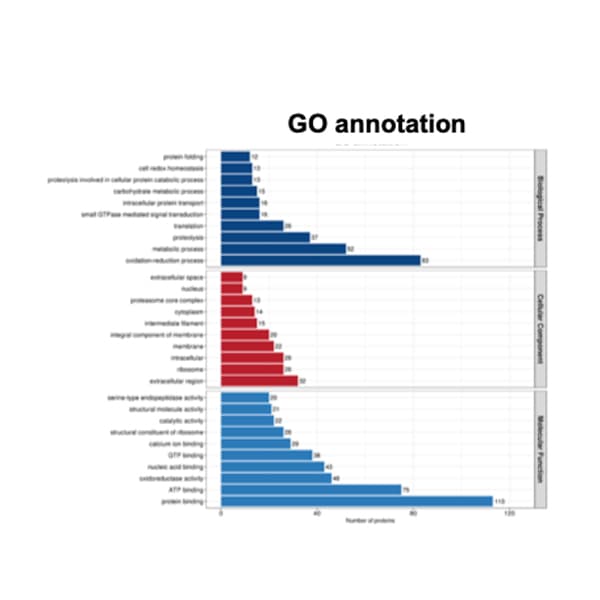
Protein Functional Annotation

To label each protein with its potential biological roles.

Image
Image
1/1
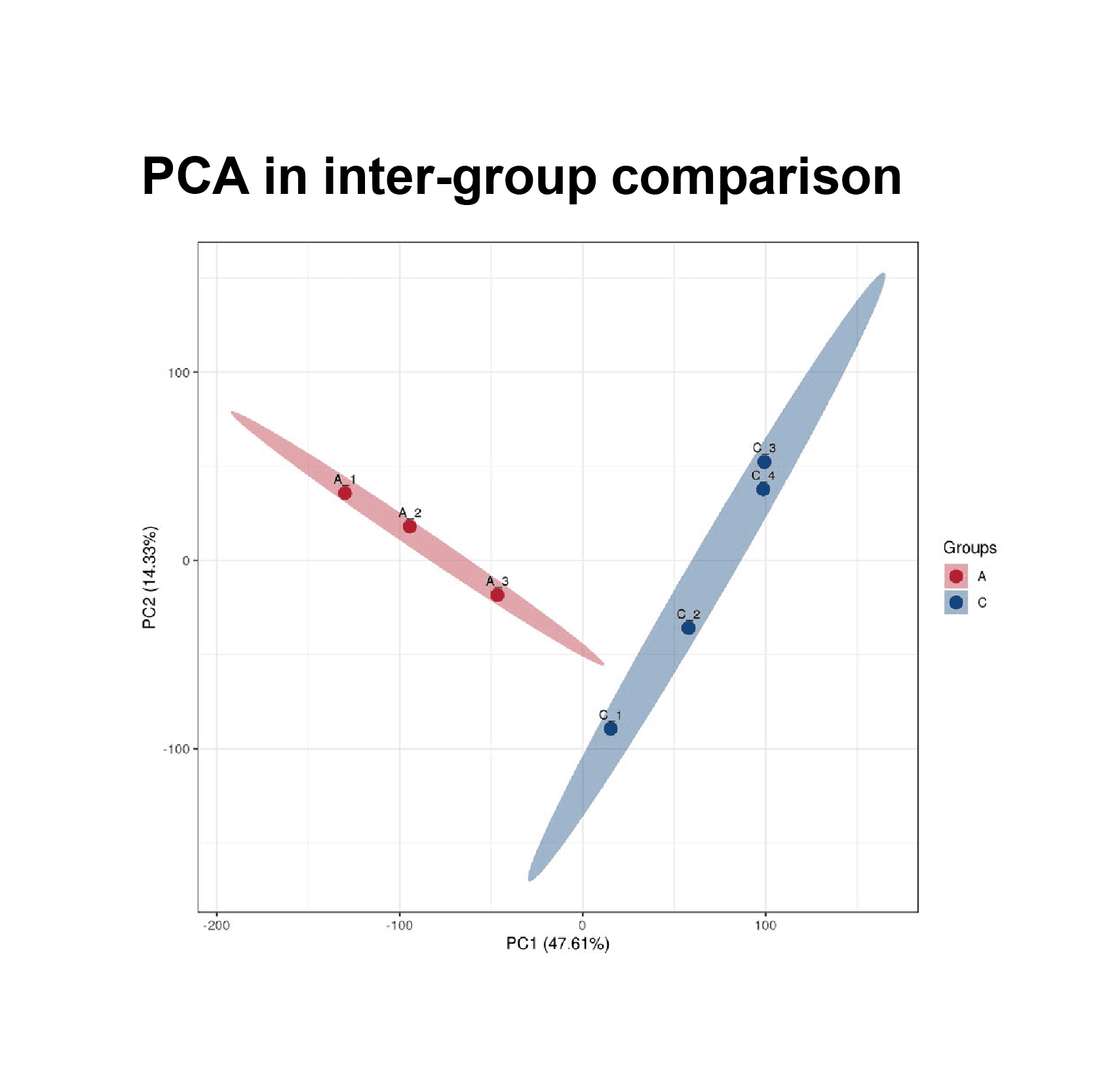
Differentially Expressed Proteins (DEPs) Analysis

Visualization of DEPs.

Image
Image
1/1
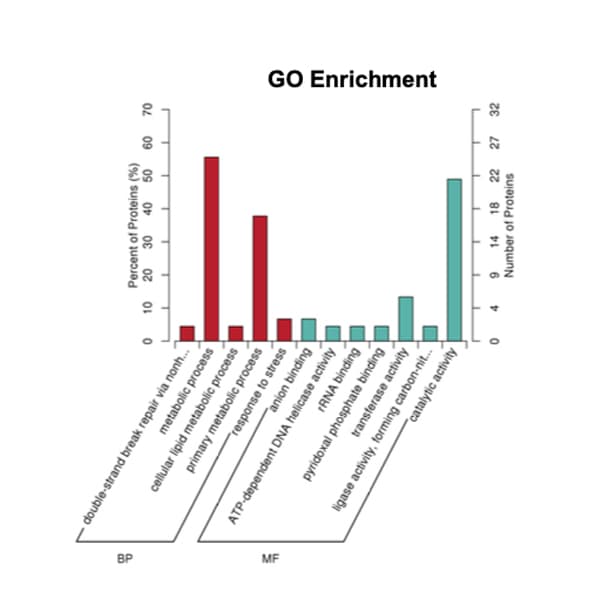
Differential Enrichment Analysis

To extract the statistically significant biological themes from DEPs.

Image
Image
1/1
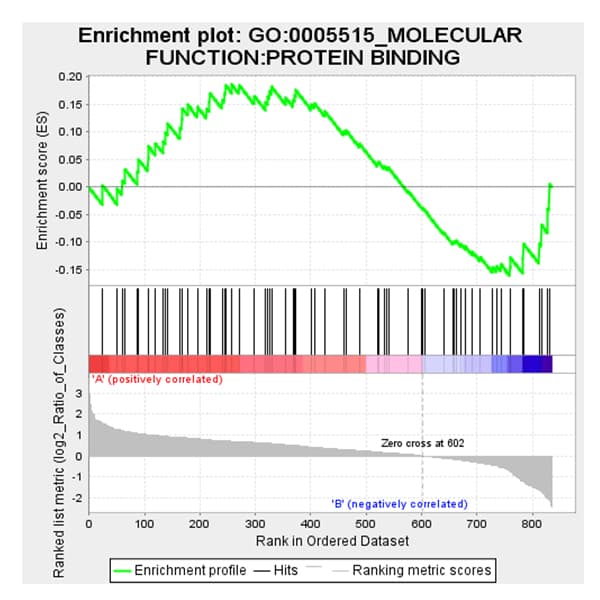
GSEA Analysis

Gene Set Enrichment Analysis (GSEA) based on different database, including GO, KEGG.

Image
Image
1/1
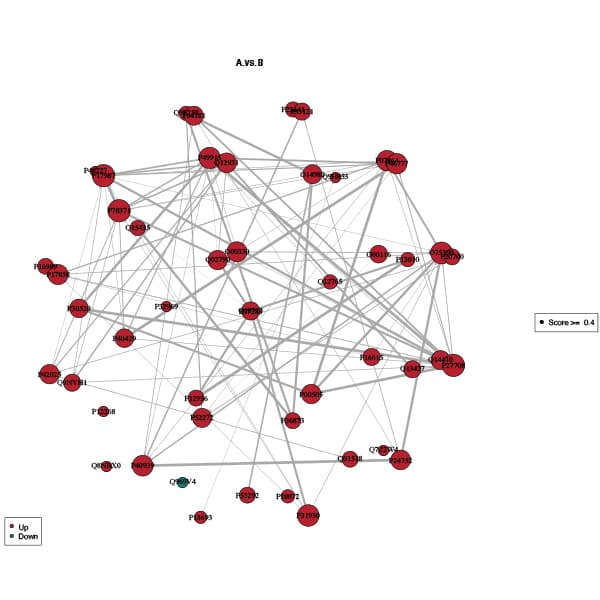
PPI Analysis

Protein-protein interaction (PPI) is performed using the StringDB protein interaction database.

Image
Image
1/1
Protein Functional Annotation

To label each protein with its potential biological roles.

Image
Image
1/1
Differentially Expressed Proteins (DEPs) Analysis

Visualization of DEPs.

Image
Image
1/1
Differential Enrichment Analysis

To extract the statistically significant biological themes from DEPs.

Image
Image
1/1
GSEA Analysis

Gene Set Enrichment Analysis (GSEA) based on different database, including GO, KEGG.

Image
Image
1/1
PPI Analysis

Protein-protein interaction (PPI) is performed using the StringDB protein interaction database.

Demo Results

Image
Image
1/1
Protein Functional Annotation

To label each protein with its potential biological roles.

Image
Image
1/1
Differentially Expressed Proteins (DEPs) Analysis

Visualization of DEPs.

Image
Image
1/1
Differential Enrichment Analysis

To extract the statistically significant biological themes from DEPs.

Image
Image
1/1
GSEA Analysis

Gene Set Enrichment Analysis (GSEA) based on different database, including GO, KEGG.

Image
Image
1/1
PPI Analysis

Protein-protein interaction (PPI) is performed using the StringDB protein interaction database.

Image
Image
1/1
Protein Functional Annotation

To label each protein with its potential biological roles.

Image
Image
1/1
Differentially Expressed Proteins (DEPs) Analysis

Visualization of DEPs.

Image
Image
1/1
Differential Enrichment Analysis

To extract the statistically significant biological themes from DEPs.

Image
Image
1/1
GSEA Analysis

Gene Set Enrichment Analysis (GSEA) based on different database, including GO, KEGG.

Image
Image
1/1
PPI Analysis

Protein-protein interaction (PPI) is performed using the StringDB protein interaction database.

Frequently Asked Questions

How many repeated samples are required?

We strongly recommend a minimum of 3 biological replicates per group, as this is critical for ensuring the validity of subsequent bioinformatics analyses.

How should I prepare and ship my samples?

What is quality control (QC) workflow for protein samples?

What is the typical turnaround time?

More Services

Olink Proteomics
(Olink Proteomics)
Olink Proteomics
(Olink Proteomics)
Untargeted Metabolomics
(Untargeted Metabolomics)
Untargeted Metabolomics
(Untargeted Metabolomics)
mRNA sequencing
(mRNA sequencing)
mRNA sequencing
(mRNA sequencing)

More Services

Olink Proteomics
(Olink Proteomics)
Olink Proteomics
(Olink Proteomics)
Untargeted Metabolomics
(Untargeted Metabolomics)
Untargeted Metabolomics
(Untargeted Metabolomics)
mRNA sequencing
(mRNA sequencing)
mRNA sequencing
(mRNA sequencing)
Background
Background

Ready to Start Your Project?

Our platform offers tailored solutions for

your unique experimental needs, ensuring a seamless experience from project design to data delivery.


Privacy PolicyCookie PolicyCareers
banner laptop bg
banner mobile bg

Quantitative Proteomics

Quantitative profiling of protein abundance to reveal differential expression and support studies of biological processes and disease mechanisms.
Request a Quote
(Quantitative Proteomics)
Request a Quote
(Quantitative Proteomics)
OverviewOverview
BenefitsBenefits
ApplicationsApplications
SpecificationsSpecifications
ResourcesResources

Proteomics reveals functional biology by directly quantifying proteins, enabling deeper insights into disease mechanisms and biomarker discovery beyond genomic predictions.


Leveraging library-free DIA on the Thermo Orbitrap Astral platform, Novogene delivers next-generation quantitative proteomics with superior data completeness, depth, and reproducibility — without missing values or DDA libraries.


Choose Rapid DIA for high-throughput studies or Deep DIA for comprehensive proteome coverage, both designed to accelerate confident biological discovery.

Why Choose Novogene for Your Proteomics Needs?

End-to-End Workflow
End-to-End Workflow

From sample preparation to LC-MS/MS analysis and expert data interpretation, we deliver a fully integrated proteomics solution.

End-to-End Workflow
End-to-End Workflow

From sample preparation to LC-MS/MS analysis and expert data interpretation, we deliver a fully integrated proteomics solution.

Scalable High-Throughput Performance

Our automated platform supports large cohort studies, processing up to 180 samples per day while identifying over 8,000 proteins.

Scalable High-Throughput Performance

Our automated platform supports large cohort studies, processing up to 180 samples per day while identifying over 8,000 proteins.

Flexible Study Design

Detection depth and acquisition time can be tailored to match your specific research objectives.

Flexible Study Design

Detection depth and acquisition time can be tailored to match your specific research objectives.

Seamless Multi-Omics Integration

Easily connect proteomics with genomics, transcriptomics, and metabolomics for deeper, systems-level insights.

Seamless Multi-Omics Integration

Easily connect proteomics with genomics, transcriptomics, and metabolomics for deeper, systems-level insights.

Proven Experience at Scale

With 200,000+ samples processed across 250+ species and 300+ sample types, our expertise translates into reliable results.

Proven Experience at Scale

With 200,000+ samples processed across 250+ species and 300+ sample types, our expertise translates into reliable results.

Advanced Platform
Advanced Platform

Powered by the Thermo Orbitrap Astral platform, our quantitative proteomics delivers high resolution, ultra sensitivity, and exceptional throughput.

Advanced Platform
Advanced Platform

Powered by the Thermo Orbitrap Astral platform, our quantitative proteomics delivers high resolution, ultra sensitivity, and exceptional throughput.

Why Choose Novogene for Your Proteomics Needs?

End-to-End Workflow
End-to-End Workflow

From sample preparation to LC-MS/MS analysis and expert data interpretation, we deliver a fully integrated proteomics solution.

End-to-End Workflow
End-to-End Workflow

From sample preparation to LC-MS/MS analysis and expert data interpretation, we deliver a fully integrated proteomics solution.

Scalable High-Throughput Performance

Our automated platform supports large cohort studies, processing up to 180 samples per day while identifying over 8,000 proteins.

Scalable High-Throughput Performance

Our automated platform supports large cohort studies, processing up to 180 samples per day while identifying over 8,000 proteins.

Flexible Study Design

Detection depth and acquisition time can be tailored to match your specific research objectives.

Flexible Study Design

Detection depth and acquisition time can be tailored to match your specific research objectives.

Seamless Multi-Omics Integration

Easily connect proteomics with genomics, transcriptomics, and metabolomics for deeper, systems-level insights.

Seamless Multi-Omics Integration

Easily connect proteomics with genomics, transcriptomics, and metabolomics for deeper, systems-level insights.

Proven Experience at Scale

With 200,000+ samples processed across 250+ species and 300+ sample types, our expertise translates into reliable results.

Proven Experience at Scale

With 200,000+ samples processed across 250+ species and 300+ sample types, our expertise translates into reliable results.

Advanced Platform
Advanced Platform

Powered by the Thermo Orbitrap Astral platform, our quantitative proteomics delivers high resolution, ultra sensitivity, and exceptional throughput.

Advanced Platform
Advanced Platform

Powered by the Thermo Orbitrap Astral platform, our quantitative proteomics delivers high resolution, ultra sensitivity, and exceptional throughput.

Applications

Discover the power of quantitative proteomics with Novogene’s services, designed to assist in a variety of research goals:

Deep Protein Profiling

Bridge discovery and validation through detailed protein characterization.

Deep Protein Profiling

Bridge discovery and validation through detailed protein characterization.

Drug Discovery & Biomarker

Identify verifiable drug targets and actionable diagnostic markers with high-quality, reproducible data.

Drug Discovery & Biomarker

Identify verifiable drug targets and actionable diagnostic markers with high-quality, reproducible data.

Function & Mechanism

Go beyond lists of proteins to discover true function and regulation within biological systems.

Function & Mechanism

Go beyond lists of proteins to discover true function and regulation within biological systems.

Agriculture & Sustainability

Develop crops and understand environmental impacts with precision proteomics.

Agriculture & Sustainability

Develop crops and understand environmental impacts with precision proteomics.

Applications

Discover the power of quantitative proteomics with Novogene’s services, designed to assist in a variety of research goals:

Deep Protein Profiling

Bridge discovery and validation through detailed protein characterization.

Deep Protein Profiling

Bridge discovery and validation through detailed protein characterization.

Drug Discovery & Biomarker

Identify verifiable drug targets and actionable diagnostic markers with high-quality, reproducible data.

Drug Discovery & Biomarker

Identify verifiable drug targets and actionable diagnostic markers with high-quality, reproducible data.

Function & Mechanism

Go beyond lists of proteins to discover true function and regulation within biological systems.

Function & Mechanism

Go beyond lists of proteins to discover true function and regulation within biological systems.

Agriculture & Sustainability

Develop crops and understand environmental impacts with precision proteomics.

Agriculture & Sustainability

Develop crops and understand environmental impacts with precision proteomics.

Specifications

Sample Requirements

Sample amounts are listed for reference only. Download the Sample Requirements to learn more. For detailed information, please contact us with your customized requests.

Sample Type* Sample Amount
Human Plasma/SerumNeat
(no high abundant protein depletion procedure)
5 μL
High-abundance protein depletion for human blood
(affinity-based)
10 μL
Animal TissueSoft tissue
(brain, heart, liver, spleen, lung, kidney, muscle, etc.)
10 mg
Hard tissue
(hair, cartilage, etc.)
200 mg
Suspension/adherent cultured cells
(it is crucial to meet the required cell pellet volume)
2×10^6
(10 μL cell pellet)
Body Fluids
(most body fluids contain large amount of proteins, so undiluted sample is preferred)
Cerebrospinal fluid/Semen/ Follicular Fluid/Saliva/Tear500 μL
Urine10 mL
Breast milk10 μL
Extracted protein sample
(solvent buffer reagent components must be provided)
Non-detergent containing protein sample (optimal buffer with 6M Urea, preferred protein concentration ≥ 0.5 μg/μL)100 μg
Detergent containing protein sample
(including SDS, triton X-100, NP40, CHAPS, etc.)
200 μg
*Please contact us for more information.

Sample Requirements

Sample amounts are listed for reference only. Download the Sample Requirements to learn more. For detailed information, please contact us with your customized requests.

Sample Type* Sample Amount
Human Plasma/SerumNeat
(no high abundant protein depletion procedure)
5 μL
High-abundance protein depletion for human blood
(affinity-based)
10 μL
Animal TissueSoft tissue
(brain, heart, liver, spleen, lung, kidney, muscle, etc.)
10 mg
Hard tissue
(hair, cartilage, etc.)
200 mg
Suspension/adherent cultured cells
(it is crucial to meet the required cell pellet volume)
2×10^6
(10 μL cell pellet)
Body Fluids
(most body fluids contain large amount of proteins, so undiluted sample is preferred)
Cerebrospinal fluid/Semen/ Follicular Fluid/Saliva/Tear500 μL
Urine10 mL
Breast milk10 μL
Extracted protein sample
(solvent buffer reagent components must be provided)
Non-detergent containing protein sample (optimal buffer with 6M Urea, preferred protein concentration ≥ 0.5 μg/μL)100 μg
Detergent containing protein sample
(including SDS, triton X-100, NP40, CHAPS, etc.)
200 μg
*Please contact us for more information.

Sample Requirements

Sample amounts are listed for reference only. Download the Sample Requirements to learn more. For detailed information, please contact us with your customized requests.

Sample Type* Sample Amount
Human Plasma/SerumNeat
(no high abundant protein depletion procedure)
5 μL
High-abundance protein depletion for human blood
(affinity-based)
10 μL
Animal TissueSoft tissue
(brain, heart, liver, spleen, lung, kidney, muscle, etc.)
10 mg
Hard tissue
(hair, cartilage, etc.)
200 mg
Suspension/adherent cultured cells
(it is crucial to meet the required cell pellet volume)
2×10^6
(10 μL cell pellet)
Body Fluids
(most body fluids contain large amount of proteins, so undiluted sample is preferred)
Cerebrospinal fluid/Semen/ Follicular Fluid/Saliva/Tear500 μL
Urine10 mL
Breast milk10 μL
Extracted protein sample
(solvent buffer reagent components must be provided)
Non-detergent containing protein sample (optimal buffer with 6M Urea, preferred protein concentration ≥ 0.5 μg/μL)100 μg
Detergent containing protein sample
(including SDS, triton X-100, NP40, CHAPS, etc.)
200 μg
*Please contact us for more information.

Sample Requirements

Sample amounts are listed for reference only. Download the Sample Requirements to learn more. For detailed information, please contact us with your customized requests.

Sample Type* Sample Amount
Human Plasma/SerumNeat
(no high abundant protein depletion procedure)
5 μL
High-abundance protein depletion for human blood
(affinity-based)
10 μL
Animal TissueSoft tissue
(brain, heart, liver, spleen, lung, kidney, muscle, etc.)
10 mg
Hard tissue
(hair, cartilage, etc.)
200 mg
Suspension/adherent cultured cells
(it is crucial to meet the required cell pellet volume)
2×10^6
(10 μL cell pellet)
Body Fluids
(most body fluids contain large amount of proteins, so undiluted sample is preferred)
Cerebrospinal fluid/Semen/ Follicular Fluid/Saliva/Tear500 μL
Urine10 mL
Breast milk10 μL
Extracted protein sample
(solvent buffer reagent components must be provided)
Non-detergent containing protein sample (optimal buffer with 6M Urea, preferred protein concentration ≥ 0.5 μg/μL)100 μg
Detergent containing protein sample
(including SDS, triton X-100, NP40, CHAPS, etc.)
200 μg
*Please contact us for more information.

Detection Details

The Orbitrap Astral mass spectrometer integrates three complementary mass analyzers into a single platform, combining precision, resolution, and speed to deliver outstanding performance and usability.

1. Quadrupole mass analyzer: Enables precise precursor ion selection.

2. Orbitrap mass analyzer: Delivers high-resolution, high dynamic range HRAM (High-Resolution Accurate Mass) spectra.

3. Astral mass analyzer: Provides high-sensitivity detection and rapid acquisition of high dynamic range HRAM spectra at speeds of up to 200 Hz.

Analyzer TypeAstral Mass Analyzer
SensitivitySingle ion detection
HRAM scan rateUp to 200 Hz
Interscan dynamic range>1000 with single microscan
Resolution80,000 at m/z 524; >50,000 at m/z 130 for TMTpro TMT 18-plex
Mass accuracyRMS <5 ppm
Mass rangem/z 40-6,000
Scan modeSIM, DDA, DIA, PRM
Analyzer TypeAstral Mass Analyzer
SensitivitySingle ion detection
HRAM scan rateUp to 200 Hz
Interscan dynamic range>1000 with single microscan
Resolution80,000 at m/z 524; >50,000 at m/z 130 for TMTpro TMT 18-plex
Mass accuracyRMS <5 ppm
Mass rangem/z 40-6,000
Scan modeSIM, DDA, DIA, PRM

Detection Details

The Orbitrap Astral mass spectrometer integrates three complementary mass analyzers into a single platform, combining precision, resolution, and speed to deliver outstanding performance and usability.

1. Quadrupole mass analyzer: Enables precise precursor ion selection.

2. Orbitrap mass analyzer: Delivers high-resolution, high dynamic range HRAM (High-Resolution Accurate Mass) spectra.

3. Astral mass analyzer: Provides high-sensitivity detection and rapid acquisition of high dynamic range HRAM spectra at speeds of up to 200 Hz.

Analyzer TypeAstral Mass Analyzer
SensitivitySingle ion detection
HRAM scan rateUp to 200 Hz
Interscan dynamic range>1000 with single microscan
Resolution80,000 at m/z 524; >50,000 at m/z 130 for TMTpro TMT 18-plex
Mass accuracyRMS <5 ppm
Mass rangem/z 40-6,000
Scan modeSIM, DDA, DIA, PRM
Analyzer TypeAstral Mass Analyzer
SensitivitySingle ion detection
HRAM scan rateUp to 200 Hz
Interscan dynamic range>1000 with single microscan
Resolution80,000 at m/z 524; >50,000 at m/z 130 for TMTpro TMT 18-plex
Mass accuracyRMS <5 ppm
Mass rangem/z 40-6,000
Scan modeSIM, DDA, DIA, PRM

Detection Details

The Orbitrap Astral mass spectrometer integrates three complementary mass analyzers into a single platform, combining precision, resolution, and speed to deliver outstanding performance and usability.

1. Quadrupole mass analyzer: Enables precise precursor ion selection.

2. Orbitrap mass analyzer: Delivers high-resolution, high dynamic range HRAM (High-Resolution Accurate Mass) spectra.

3. Astral mass analyzer: Provides high-sensitivity detection and rapid acquisition of high dynamic range HRAM spectra at speeds of up to 200 Hz.

Analyzer TypeAstral Mass Analyzer
SensitivitySingle ion detection
HRAM scan rateUp to 200 Hz
Interscan dynamic range>1000 with single microscan
Resolution80,000 at m/z 524; >50,000 at m/z 130 for TMTpro TMT 18-plex
Mass accuracyRMS <5 ppm
Mass rangem/z 40-6,000
Scan modeSIM, DDA, DIA, PRM
Analyzer TypeAstral Mass Analyzer
SensitivitySingle ion detection
HRAM scan rateUp to 200 Hz
Interscan dynamic range>1000 with single microscan
Resolution80,000 at m/z 524; >50,000 at m/z 130 for TMTpro TMT 18-plex
Mass accuracyRMS <5 ppm
Mass rangem/z 40-6,000
Scan modeSIM, DDA, DIA, PRM

Detection Details

The Orbitrap Astral mass spectrometer integrates three complementary mass analyzers into a single platform, combining precision, resolution, and speed to deliver outstanding performance and usability.

1. Quadrupole mass analyzer: Enables precise precursor ion selection.

2. Orbitrap mass analyzer: Delivers high-resolution, high dynamic range HRAM (High-Resolution Accurate Mass) spectra.

3. Astral mass analyzer: Provides high-sensitivity detection and rapid acquisition of high dynamic range HRAM spectra at speeds of up to 200 Hz.

Analyzer TypeAstral Mass Analyzer
SensitivitySingle ion detection
HRAM scan rateUp to 200 Hz
Interscan dynamic range>1000 with single microscan
Resolution80,000 at m/z 524; >50,000 at m/z 130 for TMTpro TMT 18-plex
Mass accuracyRMS <5 ppm
Mass rangem/z 40-6,000
Scan modeSIM, DDA, DIA, PRM
Analyzer TypeAstral Mass Analyzer
SensitivitySingle ion detection
HRAM scan rateUp to 200 Hz
Interscan dynamic range>1000 with single microscan
Resolution80,000 at m/z 524; >50,000 at m/z 130 for TMTpro TMT 18-plex
Mass accuracyRMS <5 ppm
Mass rangem/z 40-6,000
Scan modeSIM, DDA, DIA, PRM
ServiceTitleJournalIFCountry/RegionLink
Quantitative ProteomicsHuman induced pluripotent stem cell derived nanovesicles for cardiomyocyte protection and proliferationBioactive Materials20.3Singaporehttps://www.sciencedirect.com/science/article/pii/S2452199X25001562?via%3Dihub
Quantitative ProteomicsIntegration of transcriptomics and proteomics data for understanding the mechanisms of positive effects of carbon-based nanomaterials on plant tolerance to salt stressEnvironmental Science-Nano5.1United Stateshttps://pubs.rsc.org/en/content/articlehtml/2025/en/d5en00327j
Quantitative ProteomicsBLOC1S1 Attenuates B. Melitensis 16M LPS-Triggered Autophagy by Spatial Confinement of TDP-43Advanced Science14.1Chinahttps://advanced.onlinelibrary.wiley.com/doi/10.1002/advs.202505635

Project Workflow

From sample preparation to final data interpretation, every step of the proteomics workflow influences data quality and depth. At Novogene, we apply rigorous quality control throughout the entire process to ensure accurate, reliable, and high-quality proteomics results.

Project Workflow
ServiceTitleJournalIFCountry/RegionLink
Quantitative ProteomicsHuman induced pluripotent stem cell derived nanovesicles for cardiomyocyte protection and proliferationBioactive Materials20.3Singaporehttps://www.sciencedirect.com/science/article/pii/S2452199X25001562?via%3Dihub
Quantitative ProteomicsIntegration of transcriptomics and proteomics data for understanding the mechanisms of positive effects of carbon-based nanomaterials on plant tolerance to salt stressEnvironmental Science-Nano5.1United Stateshttps://pubs.rsc.org/en/content/articlehtml/2025/en/d5en00327j
Quantitative ProteomicsBLOC1S1 Attenuates B. Melitensis 16M LPS-Triggered Autophagy by Spatial Confinement of TDP-43Advanced Science14.1Chinahttps://advanced.onlinelibrary.wiley.com/doi/10.1002/advs.202505635

Project Workflow

From sample preparation to final data interpretation, every step of the proteomics workflow influences data quality and depth. At Novogene, we apply rigorous quality control throughout the entire process to ensure accurate, reliable, and high-quality proteomics results.

Project Workflow
ServiceTitleJournalIFCountry/RegionLink
Quantitative ProteomicsHuman induced pluripotent stem cell derived nanovesicles for cardiomyocyte protection and proliferationBioactive Materials20.3Singaporehttps://www.sciencedirect.com/science/article/pii/S2452199X25001562?via%3Dihub
Quantitative ProteomicsIntegration of transcriptomics and proteomics data for understanding the mechanisms of positive effects of carbon-based nanomaterials on plant tolerance to salt stressEnvironmental Science-Nano5.1United Stateshttps://pubs.rsc.org/en/content/articlehtml/2025/en/d5en00327j
Quantitative ProteomicsBLOC1S1 Attenuates B. Melitensis 16M LPS-Triggered Autophagy by Spatial Confinement of TDP-43Advanced Science14.1Chinahttps://advanced.onlinelibrary.wiley.com/doi/10.1002/advs.202505635

Project Workflow

From sample preparation to final data interpretation, every step of the proteomics workflow influences data quality and depth. At Novogene, we apply rigorous quality control throughout the entire process to ensure accurate, reliable, and high-quality proteomics results.

Project Workflow
ServiceTitleJournalIFCountry/RegionLink
Quantitative ProteomicsHuman induced pluripotent stem cell derived nanovesicles for cardiomyocyte protection and proliferationBioactive Materials20.3Singaporehttps://www.sciencedirect.com/science/article/pii/S2452199X25001562?via%3Dihub
Quantitative ProteomicsIntegration of transcriptomics and proteomics data for understanding the mechanisms of positive effects of carbon-based nanomaterials on plant tolerance to salt stressEnvironmental Science-Nano5.1United Stateshttps://pubs.rsc.org/en/content/articlehtml/2025/en/d5en00327j
Quantitative ProteomicsBLOC1S1 Attenuates B. Melitensis 16M LPS-Triggered Autophagy by Spatial Confinement of TDP-43Advanced Science14.1Chinahttps://advanced.onlinelibrary.wiley.com/doi/10.1002/advs.202505635

Project Workflow

From sample preparation to final data interpretation, every step of the proteomics workflow influences data quality and depth. At Novogene, we apply rigorous quality control throughout the entire process to ensure accurate, reliable, and high-quality proteomics results.

Project Workflow

Specifications

Sample Requirements

Sample amounts are listed for reference only. Download the Sample Requirements to learn more. For detailed information, please contact us with your customized requests.

Sample Type* Sample Amount
Human Plasma/SerumNeat
(no high abundant protein depletion procedure)
5 μL
High-abundance protein depletion for human blood
(affinity-based)
10 μL
Animal TissueSoft tissue
(brain, heart, liver, spleen, lung, kidney, muscle, etc.)
10 mg
Hard tissue
(hair, cartilage, etc.)
200 mg
Suspension/adherent cultured cells
(it is crucial to meet the required cell pellet volume)
2×10^6
(10 μL cell pellet)
Body Fluids
(most body fluids contain large amount of proteins, so undiluted sample is preferred)
Cerebrospinal fluid/Semen/ Follicular Fluid/Saliva/Tear500 μL
Urine10 mL
Breast milk10 μL
Extracted protein sample
(solvent buffer reagent components must be provided)
Non-detergent containing protein sample (optimal buffer with 6M Urea, preferred protein concentration ≥ 0.5 μg/μL)100 μg
Detergent containing protein sample
(including SDS, triton X-100, NP40, CHAPS, etc.)
200 μg
*Please contact us for more information.

Sample Requirements

Sample amounts are listed for reference only. Download the Sample Requirements to learn more. For detailed information, please contact us with your customized requests.

Sample Type* Sample Amount
Human Plasma/SerumNeat
(no high abundant protein depletion procedure)
5 μL
High-abundance protein depletion for human blood
(affinity-based)
10 μL
Animal TissueSoft tissue
(brain, heart, liver, spleen, lung, kidney, muscle, etc.)
10 mg
Hard tissue
(hair, cartilage, etc.)
200 mg
Suspension/adherent cultured cells
(it is crucial to meet the required cell pellet volume)
2×10^6
(10 μL cell pellet)
Body Fluids
(most body fluids contain large amount of proteins, so undiluted sample is preferred)
Cerebrospinal fluid/Semen/ Follicular Fluid/Saliva/Tear500 μL
Urine10 mL
Breast milk10 μL
Extracted protein sample
(solvent buffer reagent components must be provided)
Non-detergent containing protein sample (optimal buffer with 6M Urea, preferred protein concentration ≥ 0.5 μg/μL)100 μg
Detergent containing protein sample
(including SDS, triton X-100, NP40, CHAPS, etc.)
200 μg
*Please contact us for more information.

Sample Requirements

Sample amounts are listed for reference only. Download the Sample Requirements to learn more. For detailed information, please contact us with your customized requests.

Sample Type* Sample Amount
Human Plasma/SerumNeat
(no high abundant protein depletion procedure)
5 μL
High-abundance protein depletion for human blood
(affinity-based)
10 μL
Animal TissueSoft tissue
(brain, heart, liver, spleen, lung, kidney, muscle, etc.)
10 mg
Hard tissue
(hair, cartilage, etc.)
200 mg
Suspension/adherent cultured cells
(it is crucial to meet the required cell pellet volume)
2×10^6
(10 μL cell pellet)
Body Fluids
(most body fluids contain large amount of proteins, so undiluted sample is preferred)
Cerebrospinal fluid/Semen/ Follicular Fluid/Saliva/Tear500 μL
Urine10 mL
Breast milk10 μL
Extracted protein sample
(solvent buffer reagent components must be provided)
Non-detergent containing protein sample (optimal buffer with 6M Urea, preferred protein concentration ≥ 0.5 μg/μL)100 μg
Detergent containing protein sample
(including SDS, triton X-100, NP40, CHAPS, etc.)
200 μg
*Please contact us for more information.

Sample Requirements

Sample amounts are listed for reference only. Download the Sample Requirements to learn more. For detailed information, please contact us with your customized requests.

Sample Type* Sample Amount
Human Plasma/SerumNeat
(no high abundant protein depletion procedure)
5 μL
High-abundance protein depletion for human blood
(affinity-based)
10 μL
Animal TissueSoft tissue
(brain, heart, liver, spleen, lung, kidney, muscle, etc.)
10 mg
Hard tissue
(hair, cartilage, etc.)
200 mg
Suspension/adherent cultured cells
(it is crucial to meet the required cell pellet volume)
2×10^6
(10 μL cell pellet)
Body Fluids
(most body fluids contain large amount of proteins, so undiluted sample is preferred)
Cerebrospinal fluid/Semen/ Follicular Fluid/Saliva/Tear500 μL
Urine10 mL
Breast milk10 μL
Extracted protein sample
(solvent buffer reagent components must be provided)
Non-detergent containing protein sample (optimal buffer with 6M Urea, preferred protein concentration ≥ 0.5 μg/μL)100 μg
Detergent containing protein sample
(including SDS, triton X-100, NP40, CHAPS, etc.)
200 μg
*Please contact us for more information.

Detection Details

The Orbitrap Astral mass spectrometer integrates three complementary mass analyzers into a single platform, combining precision, resolution, and speed to deliver outstanding performance and usability.

1. Quadrupole mass analyzer: Enables precise precursor ion selection.

2. Orbitrap mass analyzer: Delivers high-resolution, high dynamic range HRAM (High-Resolution Accurate Mass) spectra.

3. Astral mass analyzer: Provides high-sensitivity detection and rapid acquisition of high dynamic range HRAM spectra at speeds of up to 200 Hz.

Analyzer TypeAstral Mass Analyzer
SensitivitySingle ion detection
HRAM scan rateUp to 200 Hz
Interscan dynamic range>1000 with single microscan
Resolution80,000 at m/z 524; >50,000 at m/z 130 for TMTpro TMT 18-plex
Mass accuracyRMS <5 ppm
Mass rangem/z 40-6,000
Scan modeSIM, DDA, DIA, PRM
Analyzer TypeAstral Mass Analyzer
SensitivitySingle ion detection
HRAM scan rateUp to 200 Hz
Interscan dynamic range>1000 with single microscan
Resolution80,000 at m/z 524; >50,000 at m/z 130 for TMTpro TMT 18-plex
Mass accuracyRMS <5 ppm
Mass rangem/z 40-6,000
Scan modeSIM, DDA, DIA, PRM

Detection Details

The Orbitrap Astral mass spectrometer integrates three complementary mass analyzers into a single platform, combining precision, resolution, and speed to deliver outstanding performance and usability.

1. Quadrupole mass analyzer: Enables precise precursor ion selection.

2. Orbitrap mass analyzer: Delivers high-resolution, high dynamic range HRAM (High-Resolution Accurate Mass) spectra.

3. Astral mass analyzer: Provides high-sensitivity detection and rapid acquisition of high dynamic range HRAM spectra at speeds of up to 200 Hz.

Analyzer TypeAstral Mass Analyzer
SensitivitySingle ion detection
HRAM scan rateUp to 200 Hz
Interscan dynamic range>1000 with single microscan
Resolution80,000 at m/z 524; >50,000 at m/z 130 for TMTpro TMT 18-plex
Mass accuracyRMS <5 ppm
Mass rangem/z 40-6,000
Scan modeSIM, DDA, DIA, PRM
Analyzer TypeAstral Mass Analyzer
SensitivitySingle ion detection
HRAM scan rateUp to 200 Hz
Interscan dynamic range>1000 with single microscan
Resolution80,000 at m/z 524; >50,000 at m/z 130 for TMTpro TMT 18-plex
Mass accuracyRMS <5 ppm
Mass rangem/z 40-6,000
Scan modeSIM, DDA, DIA, PRM

Detection Details

The Orbitrap Astral mass spectrometer integrates three complementary mass analyzers into a single platform, combining precision, resolution, and speed to deliver outstanding performance and usability.

1. Quadrupole mass analyzer: Enables precise precursor ion selection.

2. Orbitrap mass analyzer: Delivers high-resolution, high dynamic range HRAM (High-Resolution Accurate Mass) spectra.

3. Astral mass analyzer: Provides high-sensitivity detection and rapid acquisition of high dynamic range HRAM spectra at speeds of up to 200 Hz.

Analyzer TypeAstral Mass Analyzer
SensitivitySingle ion detection
HRAM scan rateUp to 200 Hz
Interscan dynamic range>1000 with single microscan
Resolution80,000 at m/z 524; >50,000 at m/z 130 for TMTpro TMT 18-plex
Mass accuracyRMS <5 ppm
Mass rangem/z 40-6,000
Scan modeSIM, DDA, DIA, PRM
Analyzer TypeAstral Mass Analyzer
SensitivitySingle ion detection
HRAM scan rateUp to 200 Hz
Interscan dynamic range>1000 with single microscan
Resolution80,000 at m/z 524; >50,000 at m/z 130 for TMTpro TMT 18-plex
Mass accuracyRMS <5 ppm
Mass rangem/z 40-6,000
Scan modeSIM, DDA, DIA, PRM

Detection Details

The Orbitrap Astral mass spectrometer integrates three complementary mass analyzers into a single platform, combining precision, resolution, and speed to deliver outstanding performance and usability.

1. Quadrupole mass analyzer: Enables precise precursor ion selection.

2. Orbitrap mass analyzer: Delivers high-resolution, high dynamic range HRAM (High-Resolution Accurate Mass) spectra.

3. Astral mass analyzer: Provides high-sensitivity detection and rapid acquisition of high dynamic range HRAM spectra at speeds of up to 200 Hz.

Analyzer TypeAstral Mass Analyzer
SensitivitySingle ion detection
HRAM scan rateUp to 200 Hz
Interscan dynamic range>1000 with single microscan
Resolution80,000 at m/z 524; >50,000 at m/z 130 for TMTpro TMT 18-plex
Mass accuracyRMS <5 ppm
Mass rangem/z 40-6,000
Scan modeSIM, DDA, DIA, PRM
Analyzer TypeAstral Mass Analyzer
SensitivitySingle ion detection
HRAM scan rateUp to 200 Hz
Interscan dynamic range>1000 with single microscan
Resolution80,000 at m/z 524; >50,000 at m/z 130 for TMTpro TMT 18-plex
Mass accuracyRMS <5 ppm
Mass rangem/z 40-6,000
Scan modeSIM, DDA, DIA, PRM
ServiceTitleJournalIFCountry/RegionLink
Quantitative ProteomicsHuman induced pluripotent stem cell derived nanovesicles for cardiomyocyte protection and proliferationBioactive Materials20.3Singaporehttps://www.sciencedirect.com/science/article/pii/S2452199X25001562?via%3Dihub
Quantitative ProteomicsIntegration of transcriptomics and proteomics data for understanding the mechanisms of positive effects of carbon-based nanomaterials on plant tolerance to salt stressEnvironmental Science-Nano5.1United Stateshttps://pubs.rsc.org/en/content/articlehtml/2025/en/d5en00327j
Quantitative ProteomicsBLOC1S1 Attenuates B. Melitensis 16M LPS-Triggered Autophagy by Spatial Confinement of TDP-43Advanced Science14.1Chinahttps://advanced.onlinelibrary.wiley.com/doi/10.1002/advs.202505635

Project Workflow

From sample preparation to final data interpretation, every step of the proteomics workflow influences data quality and depth. At Novogene, we apply rigorous quality control throughout the entire process to ensure accurate, reliable, and high-quality proteomics results.

Project Workflow
ServiceTitleJournalIFCountry/RegionLink
Quantitative ProteomicsHuman induced pluripotent stem cell derived nanovesicles for cardiomyocyte protection and proliferationBioactive Materials20.3Singaporehttps://www.sciencedirect.com/science/article/pii/S2452199X25001562?via%3Dihub
Quantitative ProteomicsIntegration of transcriptomics and proteomics data for understanding the mechanisms of positive effects of carbon-based nanomaterials on plant tolerance to salt stressEnvironmental Science-Nano5.1United Stateshttps://pubs.rsc.org/en/content/articlehtml/2025/en/d5en00327j
Quantitative ProteomicsBLOC1S1 Attenuates B. Melitensis 16M LPS-Triggered Autophagy by Spatial Confinement of TDP-43Advanced Science14.1Chinahttps://advanced.onlinelibrary.wiley.com/doi/10.1002/advs.202505635

Project Workflow

From sample preparation to final data interpretation, every step of the proteomics workflow influences data quality and depth. At Novogene, we apply rigorous quality control throughout the entire process to ensure accurate, reliable, and high-quality proteomics results.

Project Workflow
ServiceTitleJournalIFCountry/RegionLink
Quantitative ProteomicsHuman induced pluripotent stem cell derived nanovesicles for cardiomyocyte protection and proliferationBioactive Materials20.3Singaporehttps://www.sciencedirect.com/science/article/pii/S2452199X25001562?via%3Dihub
Quantitative ProteomicsIntegration of transcriptomics and proteomics data for understanding the mechanisms of positive effects of carbon-based nanomaterials on plant tolerance to salt stressEnvironmental Science-Nano5.1United Stateshttps://pubs.rsc.org/en/content/articlehtml/2025/en/d5en00327j
Quantitative ProteomicsBLOC1S1 Attenuates B. Melitensis 16M LPS-Triggered Autophagy by Spatial Confinement of TDP-43Advanced Science14.1Chinahttps://advanced.onlinelibrary.wiley.com/doi/10.1002/advs.202505635

Project Workflow

From sample preparation to final data interpretation, every step of the proteomics workflow influences data quality and depth. At Novogene, we apply rigorous quality control throughout the entire process to ensure accurate, reliable, and high-quality proteomics results.

Project Workflow
ServiceTitleJournalIFCountry/RegionLink
Quantitative ProteomicsHuman induced pluripotent stem cell derived nanovesicles for cardiomyocyte protection and proliferationBioactive Materials20.3Singaporehttps://www.sciencedirect.com/science/article/pii/S2452199X25001562?via%3Dihub
Quantitative ProteomicsIntegration of transcriptomics and proteomics data for understanding the mechanisms of positive effects of carbon-based nanomaterials on plant tolerance to salt stressEnvironmental Science-Nano5.1United Stateshttps://pubs.rsc.org/en/content/articlehtml/2025/en/d5en00327j
Quantitative ProteomicsBLOC1S1 Attenuates B. Melitensis 16M LPS-Triggered Autophagy by Spatial Confinement of TDP-43Advanced Science14.1Chinahttps://advanced.onlinelibrary.wiley.com/doi/10.1002/advs.202505635

Project Workflow

From sample preparation to final data interpretation, every step of the proteomics workflow influences data quality and depth. At Novogene, we apply rigorous quality control throughout the entire process to ensure accurate, reliable, and high-quality proteomics results.

Project Workflow

Demo Results

Image
Image
1/1
Protein Functional Annotation

To label each protein with its potential biological roles.

Image
Image
1/1
Differentially Expressed Proteins (DEPs) Analysis

Visualization of DEPs.

Image
Image
1/1
Differential Enrichment Analysis

To extract the statistically significant biological themes from DEPs.

Image
Image
1/1
GSEA Analysis

Gene Set Enrichment Analysis (GSEA) based on different database, including GO, KEGG.

Image
Image
1/1
PPI Analysis

Protein-protein interaction (PPI) is performed using the StringDB protein interaction database.

Image
Image
1/1
Protein Functional Annotation

To label each protein with its potential biological roles.

Image
Image
1/1
Differentially Expressed Proteins (DEPs) Analysis

Visualization of DEPs.

Image
Image
1/1
Differential Enrichment Analysis

To extract the statistically significant biological themes from DEPs.

Image
Image
1/1
GSEA Analysis

Gene Set Enrichment Analysis (GSEA) based on different database, including GO, KEGG.

Image
Image
1/1
PPI Analysis

Protein-protein interaction (PPI) is performed using the StringDB protein interaction database.

Demo Results

Image
Image
1/1
Protein Functional Annotation

To label each protein with its potential biological roles.

Image
Image
1/1
Differentially Expressed Proteins (DEPs) Analysis

Visualization of DEPs.

Image
Image
1/1
Differential Enrichment Analysis

To extract the statistically significant biological themes from DEPs.

Image
Image
1/1
GSEA Analysis

Gene Set Enrichment Analysis (GSEA) based on different database, including GO, KEGG.

Image
Image
1/1
PPI Analysis

Protein-protein interaction (PPI) is performed using the StringDB protein interaction database.

Image
Image
1/1
Protein Functional Annotation

To label each protein with its potential biological roles.

Image
Image
1/1
Differentially Expressed Proteins (DEPs) Analysis

Visualization of DEPs.

Image
Image
1/1
Differential Enrichment Analysis

To extract the statistically significant biological themes from DEPs.

Image
Image
1/1
GSEA Analysis

Gene Set Enrichment Analysis (GSEA) based on different database, including GO, KEGG.

Image
Image
1/1
PPI Analysis

Protein-protein interaction (PPI) is performed using the StringDB protein interaction database.

Frequently Asked Questions

How many repeated samples are required?

We strongly recommend a minimum of 3 biological replicates per group, as this is critical for ensuring the validity of subsequent bioinformatics analyses.

How should I prepare and ship my samples?

What is quality control (QC) workflow for protein samples?

What is the typical turnaround time?

More Services

Olink Proteomics
(Olink Proteomics)
Olink Proteomics
(Olink Proteomics)
Untargeted Metabolomics
(Untargeted Metabolomics)
Untargeted Metabolomics
(Untargeted Metabolomics)
mRNA sequencing
(mRNA sequencing)
mRNA sequencing
(mRNA sequencing)

More Services

Olink Proteomics
(Olink Proteomics)
Olink Proteomics
(Olink Proteomics)
Untargeted Metabolomics
(Untargeted Metabolomics)
Untargeted Metabolomics
(Untargeted Metabolomics)
mRNA sequencing
(mRNA sequencing)
mRNA sequencing
(mRNA sequencing)
Background
Background

Ready to Start Your Project?

Our platform offers tailored solutions for

your unique experimental needs, ensuring a seamless experience from project design to data delivery.


Privacy PolicyCookie PolicyCareers