
Novogene AMEA
  • Novogene AMEA
  • Genomics
    • Human Whole Genome Sequencing
    • Plant and Animal Whole Genome Sequencing
    • Microbial Whole Genome Sequencing
    • Plant and Animal De novo Sequencing
    • Microbial De novo Sequencing
    • Shotgun Metagenomics Sequencing
    • Amplicon Sequencing
    • Whole Exome Sequencing
    Transcriptomics
    • mRNA Sequencing
    • Total RNA Sequencing
    • Full-Length Transcriptome Sequencing
    • Whole Transcriptome Sequencing
    • Small RNA Sequencing
    • Circular RNA Sequencing
    • Metatranscriptome Sequencing
    • Prokaryotic RNA Sequencing
    Single Cell & Spatial Omics
    • Single Cell Gene Expression
    • Single Cell Immune Profiling Sequencing
    • Single Cell Long Read Transcriptome
    • Visium HD Spatial Gene Expression
    • Stereo-Seq Spatial Gene Expression
    • Xenium In Situ Spatial Transcriptome
    Epigenomics
    • Whole Genome Bisulfite Sequencing (WGBS)
    • Directed DNA Methylation Sequencing (DM-Seq) NEW
    • Reduced Representation Bisulfite Sequencing (RRBS)
    • Chromatin Immunoprecipitation Sequencing (ChIP-seq)
    • RNA Immunoprecipitation Sequencing (RIP-seq)
    • Assay for Transposase-Accessible Chromatin with Sequencing (ATAC-seq)

    Premade Library

    • Sequencing Only on Illumina Sequencer
    • Sequencing Only on PacBio Sequencer
    Proteomics and Metabolomics
    • Olink Proteomics
    • Quantitative Proteomics
    • Untargeted Metabolomics
  • PromotionsPromotions
    • Platforms
    • Automated Delivery Platform (Falcon)
    • Bioinformatics Analysis Tool (NovoMagic)
    • Customer Service System (CSS)
    • Brochures
    • Case Studies
    • Webinar
    • Blog
    • Sample Guidelines
    • Cancer Research
    • Immuno-oncology
    • Agrigenomics
    • Environment
    • Food Science
    • Human Microbiome
    • Plant and Animal Microbiome
    • Drug Discovery and Development
    • Rare and Complex Diseases
    • About Us
    • Our Locations
    • News
    • Careers
  • Contact UsContact Us

ServicesServices menu

SupportSupport menu

CompanyCompany menu

Services
Whole Genome SequencingDe novo SequencingAmplicon SequencingShotgun Metagenomic SequencingDirected DNA Methylation Sequencing (DM-Seq)mRNA SequencingSingle Cell Gene ExpressionVisium HD Spatial Gene ExpressionXenium In Situ Spatial TranscriptomeOlink ProteomicsUntargeted Metabolomics
Support
NovoMagic Bioinformatics Analysis ToolCustomer Service SystemFalcon Intelligent Delivery Platform
Company
About UsOur LocationsOur PlatformsNewsCareersContact Us
LinkedInLinkedIn hoverYouTubeYouTube hoverXX hover
Copyright © 2026 Novogene Inc. All rights reserved.For Research Use Only. Not for Clinical Diagnostic Use.
Novogene AMEA
  • Novogene AMEA
  • Genomics
    • Human Whole Genome Sequencing
    • Plant and Animal Whole Genome Sequencing
    • Microbial Whole Genome Sequencing
    • Plant and Animal De novo Sequencing
    • Microbial De novo Sequencing
    • Shotgun Metagenomics Sequencing
    • Amplicon Sequencing
    • Whole Exome Sequencing
    Transcriptomics
    • mRNA Sequencing
    • Total RNA Sequencing
    • Full-Length Transcriptome Sequencing
    • Whole Transcriptome Sequencing
    • Small RNA Sequencing
    • Circular RNA Sequencing
    • Metatranscriptome Sequencing
    • Prokaryotic RNA Sequencing
    Single Cell & Spatial Omics
    • Single Cell Gene Expression
    • Single Cell Immune Profiling Sequencing
    • Single Cell Long Read Transcriptome
    • Visium HD Spatial Gene Expression
    • Stereo-Seq Spatial Gene Expression
    • Xenium In Situ Spatial Transcriptome
    Epigenomics
    • Whole Genome Bisulfite Sequencing (WGBS)
    • Directed DNA Methylation Sequencing (DM-Seq) NEW
    • Reduced Representation Bisulfite Sequencing (RRBS)
    • Chromatin Immunoprecipitation Sequencing (ChIP-seq)
    • RNA Immunoprecipitation Sequencing (RIP-seq)
    • Assay for Transposase-Accessible Chromatin with Sequencing (ATAC-seq)

    Premade Library

    • Sequencing Only on Illumina Sequencer
    • Sequencing Only on PacBio Sequencer
    Proteomics and Metabolomics
    • Olink Proteomics
    • Quantitative Proteomics
    • Untargeted Metabolomics
  • PromotionsPromotions
    • Platforms
    • Automated Delivery Platform (Falcon)
    • Bioinformatics Analysis Tool (NovoMagic)
    • Customer Service System (CSS)
    • Brochures
    • Case Studies
    • Webinar
    • Blog
    • Sample Guidelines
    • Cancer Research
    • Immuno-oncology
    • Agrigenomics
    • Environment
    • Food Science
    • Human Microbiome
    • Plant and Animal Microbiome
    • Drug Discovery and Development
    • Rare and Complex Diseases
    • About Us
    • Our Locations
    • News
    • Careers
  • Contact UsContact Us

ServicesServices menu

SupportSupport menu

CompanyCompany menu

Services
Whole Genome SequencingDe novo SequencingAmplicon SequencingShotgun Metagenomic SequencingDirected DNA Methylation Sequencing (DM-Seq)mRNA SequencingSingle Cell Gene ExpressionVisium HD Spatial Gene ExpressionXenium In Situ Spatial TranscriptomeOlink ProteomicsUntargeted Metabolomics
Support
NovoMagic Bioinformatics Analysis ToolCustomer Service SystemFalcon Intelligent Delivery Platform
Company
About UsOur LocationsOur PlatformsNewsCareersContact Us
LinkedInLinkedIn hoverYouTubeYouTube hoverXX hover
Copyright © 2026 Novogene Inc. All rights reserved.For Research Use Only. Not for Clinical Diagnostic Use.
banner laptop bg
banner mobile bg

Small RNA Sequencing

Comprehensive profiling of small RNA species to reveal regulatory RNA populations and post-transcriptional gene regulatory mechanisms.
Request a Quote
(Small RNA Sequencing)
Request a Quote
(Small RNA Sequencing)
OverviewOverview
BenefitsBenefits
ApplicationsApplications
SpecificationsSpecifications
ResourcesResources

Small RNA sequencing (sRNA-seq) is a high-throughput next-generation sequencing (NGS) method used to identify, quantify, and characterize small RNA molecules, including miRNAs, siRNAs, piRNAs, and other regulatory RNAs. This approach enables both the detection of known small RNAs and the discovery of novel small RNA species, providing insights into their roles in gene regulation, development, stress response, and disease biology.

Novogene’s small RNA-seq service offers highly sensitive, high resolution profiling of diverse small RNA populations in a single assay. Supported by a robust in-house bioinformatics pipeline, the workflow enables accurate differential-expression analysis, discovery of novel small RNAs, evaluation of structural or sequence alterations, and comprehensive characterization of miRNA expression patterns across experimental conditions.

Benefits of Novogene Small RNA Sequencing

Small RNA sequencing (sRNA-seq) is a cutting-edge NGS technology that enables in-depth investigation of small RNAs, delivering valuable insights for both basic research and clinical applications.

Dual Sample Type Compatibility

It supports sequencing of small RNAs from both total RNA and exosomal RNA samples, enabling multi-dimensional exploration of small RNA dynamics in intracellular and extracellular environments.

Dual Sample Type Compatibility

It supports sequencing of small RNAs from both total RNA and exosomal RNA samples, enabling multi-dimensional exploration of small RNA dynamics in intracellular and extracellular environments.

Novel Molecule Discovery

It identifies previously unknown small RNA species, expanding the understanding of their identities and functional roles in biological processes.

Novel Molecule Discovery

It identifies previously unknown small RNA species, expanding the understanding of their identities and functional roles in biological processes.

Disease Association Analysis

It uncovers aberrant small-RNA expression patterns linked to cancers, neurological disorders, and other diseases, facilitating biomarker discovery and therapeutic target identification.

Disease Association Analysis

It uncovers aberrant small-RNA expression patterns linked to cancers, neurological disorders, and other diseases, facilitating biomarker discovery and therapeutic target identification.

Regulatory Mechanism Decoding

It elucidates post-transcriptional gene-regulation networks mediated by small RNAs, providing a comprehensive view of cellular molecular interactions.

Regulatory Mechanism Decoding

It elucidates post-transcriptional gene-regulation networks mediated by small RNAs, providing a comprehensive view of cellular molecular interactions.

Benefits of Novogene Small RNA Sequencing

Small RNA sequencing (sRNA-seq) is a cutting-edge NGS technology that enables in-depth investigation of small RNAs, delivering valuable insights for both basic research and clinical applications.

Dual Sample Type Compatibility

It supports sequencing of small RNAs from both total RNA and exosomal RNA samples, enabling multi-dimensional exploration of small RNA dynamics in intracellular and extracellular environments.

Dual Sample Type Compatibility

It supports sequencing of small RNAs from both total RNA and exosomal RNA samples, enabling multi-dimensional exploration of small RNA dynamics in intracellular and extracellular environments.

Novel Molecule Discovery

It identifies previously unknown small RNA species, expanding the understanding of their identities and functional roles in biological processes.

Novel Molecule Discovery

It identifies previously unknown small RNA species, expanding the understanding of their identities and functional roles in biological processes.

Disease Association Analysis

It uncovers aberrant small-RNA expression patterns linked to cancers, neurological disorders, and other diseases, facilitating biomarker discovery and therapeutic target identification.

Disease Association Analysis

It uncovers aberrant small-RNA expression patterns linked to cancers, neurological disorders, and other diseases, facilitating biomarker discovery and therapeutic target identification.

Regulatory Mechanism Decoding

It elucidates post-transcriptional gene-regulation networks mediated by small RNAs, providing a comprehensive view of cellular molecular interactions.

Regulatory Mechanism Decoding

It elucidates post-transcriptional gene-regulation networks mediated by small RNAs, providing a comprehensive view of cellular molecular interactions.

Applications of Small RNA Sequencing

Small RNA-seq has been unlocking remarkable research opportunities and clinical potentials, including:

Precise profiling

Quantifying known small RNAs (e.g., miRNAs and siRNAs) and discovering novel small RNA molecules.

Precise profiling

Quantifying known small RNAs (e.g., miRNAs and siRNAs) and discovering novel small RNA molecules.

Disease biomarker discovery

Identifying diagnostic and prognostic biomarkers for cancers, metabolic disorders, and infectious diseases.

Disease biomarker discovery

Identifying diagnostic and prognostic biomarkers for cancers, metabolic disorders, and infectious diseases.

Regulatory mechanism elucidation

Unraveling post-transcriptional gene regulation pathways mediated by small RNAs.

Regulatory mechanism elucidation

Unraveling post-transcriptional gene regulation pathways mediated by small RNAs.

Therapeutic target exploration

Predicting and validating small RNA targets for drug development and personalized medicine.

Therapeutic target exploration

Predicting and validating small RNA targets for drug development and personalized medicine.

Applications of Small RNA Sequencing

Small RNA-seq has been unlocking remarkable research opportunities and clinical potentials, including:

Precise profiling

Quantifying known small RNAs (e.g., miRNAs and siRNAs) and discovering novel small RNA molecules.

Precise profiling

Quantifying known small RNAs (e.g., miRNAs and siRNAs) and discovering novel small RNA molecules.

Disease biomarker discovery

Identifying diagnostic and prognostic biomarkers for cancers, metabolic disorders, and infectious diseases.

Disease biomarker discovery

Identifying diagnostic and prognostic biomarkers for cancers, metabolic disorders, and infectious diseases.

Regulatory mechanism elucidation

Unraveling post-transcriptional gene regulation pathways mediated by small RNAs.

Regulatory mechanism elucidation

Unraveling post-transcriptional gene regulation pathways mediated by small RNAs.

Therapeutic target exploration

Predicting and validating small RNA targets for drug development and personalized medicine.

Therapeutic target exploration

Predicting and validating small RNA targets for drug development and personalized medicine.

Specifications

Sample Requirements

Sample amounts are listed for reference only. Download the Sample Requirements to learn more. For detailed information, please contact us with your customized requests.

Library TypeSample TypeAmountRNA Integrity Number (Agilent 5400)Purity (NanoDrop)
Small RNA LibraryTotal RNA≥ 1.5 μg≥6.5, with flat baselineOD260/280≥ 2.0;
OD260/230≥ 2.0;
no degradation, no contamination
Exosomal Small RNA LibraryExosomal RNA≥ 20 ngFragments between
25-200nt, FU>10

Sample Requirements

Sample amounts are listed for reference only. Download the Sample Requirements to learn more. For detailed information, please contact us with your customized requests.

Library TypeSample TypeAmountRNA Integrity Number (Agilent 5400)Purity (NanoDrop)
Small RNA LibraryTotal RNA≥ 1.5 μg≥6.5, with flat baselineOD260/280≥ 2.0;
OD260/230≥ 2.0;
no degradation, no contamination
Exosomal Small RNA LibraryExosomal RNA≥ 20 ngFragments between
25-200nt, FU>10

Sample Requirements

Sample amounts are listed for reference only. Download the Sample Requirements to learn more. For detailed information, please contact us with your customized requests.

Library TypeSample TypeAmountRNA Integrity Number (Agilent 5400)Purity (NanoDrop)
Small RNA LibraryTotal RNA≥ 1.5 μg≥6.5, with flat baselineOD260/280≥ 2.0;
OD260/230≥ 2.0;
no degradation, no contamination
Exosomal Small RNA LibraryExosomal RNA≥ 20 ngFragments between
25-200nt, FU>10

Sample Requirements

Sample amounts are listed for reference only. Download the Sample Requirements to learn more. For detailed information, please contact us with your customized requests.

Library TypeSample TypeAmountRNA Integrity Number (Agilent 5400)Purity (NanoDrop)
Small RNA LibraryTotal RNA≥ 1.5 μg≥6.5, with flat baselineOD260/280≥ 2.0;
OD260/230≥ 2.0;
no degradation, no contamination
Exosomal Small RNA LibraryExosomal RNA≥ 20 ngFragments between
25-200nt, FU>10

Sequencing and Analysis

Recommended data outputs and analysis contents displayed are for reference only. For detailed information, please contact us with your customized requests.

Sequencing PlatformIllumina NovaSeq System
Read LengthSingle-end 50 bp
Recommended Sequencing Depth≥ 10 million read pair per sample
Standard Analysis (miRNA)Data Quality Control
Summary of Length Distribution
Common & Specific Sequence Summary
Identification & Characterization of miRNAs
Classification & Annotation of miRNA
Quantification & Differential Expression Analysis
Functional Enrichment Analysis

Project Workflow

The workflow of the small RNA-seq starts with sample preparation and quality control.


Total RNA was used as input material for the RNA sample preparations. Briefly, 3′ and 5′ adapters are ligated to 3′ and 5′ ends of small RNAs, respectively. Then the first-strand cDNA is synthesized after hybridization with reverse-transcription primer. The double-stranded cDNA library is generated through PCR enrichment, and the sequencing is performed on the Illumina sequencing platform. The downstream processing follows the well-established bioinformatics pipeline, which guarantees the highest quality results. Customized bioinformatics solutions are available upon request.

Project Workflow

Sequencing and Analysis

Recommended data outputs and analysis contents displayed are for reference only. For detailed information, please contact us with your customized requests.

Sequencing PlatformIllumina NovaSeq System
Read LengthSingle-end 50 bp
Recommended Sequencing Depth≥ 10 million read pair per sample
Standard Analysis (miRNA)Data Quality Control
Summary of Length Distribution
Common & Specific Sequence Summary
Identification & Characterization of miRNAs
Classification & Annotation of miRNA
Quantification & Differential Expression Analysis
Functional Enrichment Analysis

Project Workflow

The workflow of the small RNA-seq starts with sample preparation and quality control.


Total RNA was used as input material for the RNA sample preparations. Briefly, 3′ and 5′ adapters are ligated to 3′ and 5′ ends of small RNAs, respectively. Then the first-strand cDNA is synthesized after hybridization with reverse-transcription primer. The double-stranded cDNA library is generated through PCR enrichment, and the sequencing is performed on the Illumina sequencing platform. The downstream processing follows the well-established bioinformatics pipeline, which guarantees the highest quality results. Customized bioinformatics solutions are available upon request.

Project Workflow

Sequencing and Analysis

Recommended data outputs and analysis contents displayed are for reference only. For detailed information, please contact us with your customized requests.

Sequencing PlatformIllumina NovaSeq System
Read LengthSingle-end 50 bp
Recommended Sequencing Depth≥ 10 million read pair per sample
Standard Analysis (miRNA)Data Quality Control
Summary of Length Distribution
Common & Specific Sequence Summary
Identification & Characterization of miRNAs
Classification & Annotation of miRNA
Quantification & Differential Expression Analysis
Functional Enrichment Analysis

Project Workflow

The workflow of the small RNA-seq starts with sample preparation and quality control.


Total RNA was used as input material for the RNA sample preparations. Briefly, 3′ and 5′ adapters are ligated to 3′ and 5′ ends of small RNAs, respectively. Then the first-strand cDNA is synthesized after hybridization with reverse-transcription primer. The double-stranded cDNA library is generated through PCR enrichment, and the sequencing is performed on the Illumina sequencing platform. The downstream processing follows the well-established bioinformatics pipeline, which guarantees the highest quality results. Customized bioinformatics solutions are available upon request.

Project Workflow

Sequencing and Analysis

Recommended data outputs and analysis contents displayed are for reference only. For detailed information, please contact us with your customized requests.

Sequencing PlatformIllumina NovaSeq System
Read LengthSingle-end 50 bp
Recommended Sequencing Depth≥ 10 million read pair per sample
Standard Analysis (miRNA)Data Quality Control
Summary of Length Distribution
Common & Specific Sequence Summary
Identification & Characterization of miRNAs
Classification & Annotation of miRNA
Quantification & Differential Expression Analysis
Functional Enrichment Analysis

Project Workflow

The workflow of the small RNA-seq starts with sample preparation and quality control.


Total RNA was used as input material for the RNA sample preparations. Briefly, 3′ and 5′ adapters are ligated to 3′ and 5′ ends of small RNAs, respectively. Then the first-strand cDNA is synthesized after hybridization with reverse-transcription primer. The double-stranded cDNA library is generated through PCR enrichment, and the sequencing is performed on the Illumina sequencing platform. The downstream processing follows the well-established bioinformatics pipeline, which guarantees the highest quality results. Customized bioinformatics solutions are available upon request.

Project Workflow

Specifications

Sample Requirements

Sample amounts are listed for reference only. Download the Sample Requirements to learn more. For detailed information, please contact us with your customized requests.

Library TypeSample TypeAmountRNA Integrity Number (Agilent 5400)Purity (NanoDrop)
Small RNA LibraryTotal RNA≥ 1.5 μg≥6.5, with flat baselineOD260/280≥ 2.0;
OD260/230≥ 2.0;
no degradation, no contamination
Exosomal Small RNA LibraryExosomal RNA≥ 20 ngFragments between
25-200nt, FU>10

Sample Requirements

Sample amounts are listed for reference only. Download the Sample Requirements to learn more. For detailed information, please contact us with your customized requests.

Library TypeSample TypeAmountRNA Integrity Number (Agilent 5400)Purity (NanoDrop)
Small RNA LibraryTotal RNA≥ 1.5 μg≥6.5, with flat baselineOD260/280≥ 2.0;
OD260/230≥ 2.0;
no degradation, no contamination
Exosomal Small RNA LibraryExosomal RNA≥ 20 ngFragments between
25-200nt, FU>10

Sample Requirements

Sample amounts are listed for reference only. Download the Sample Requirements to learn more. For detailed information, please contact us with your customized requests.

Library TypeSample TypeAmountRNA Integrity Number (Agilent 5400)Purity (NanoDrop)
Small RNA LibraryTotal RNA≥ 1.5 μg≥6.5, with flat baselineOD260/280≥ 2.0;
OD260/230≥ 2.0;
no degradation, no contamination
Exosomal Small RNA LibraryExosomal RNA≥ 20 ngFragments between
25-200nt, FU>10

Sample Requirements

Sample amounts are listed for reference only. Download the Sample Requirements to learn more. For detailed information, please contact us with your customized requests.

Library TypeSample TypeAmountRNA Integrity Number (Agilent 5400)Purity (NanoDrop)
Small RNA LibraryTotal RNA≥ 1.5 μg≥6.5, with flat baselineOD260/280≥ 2.0;
OD260/230≥ 2.0;
no degradation, no contamination
Exosomal Small RNA LibraryExosomal RNA≥ 20 ngFragments between
25-200nt, FU>10

Sequencing and Analysis

Recommended data outputs and analysis contents displayed are for reference only. For detailed information, please contact us with your customized requests.

Sequencing PlatformIllumina NovaSeq System
Read LengthSingle-end 50 bp
Recommended Sequencing Depth≥ 10 million read pair per sample
Standard Analysis (miRNA)Data Quality Control
Summary of Length Distribution
Common & Specific Sequence Summary
Identification & Characterization of miRNAs
Classification & Annotation of miRNA
Quantification & Differential Expression Analysis
Functional Enrichment Analysis

Project Workflow

The workflow of the small RNA-seq starts with sample preparation and quality control.


Total RNA was used as input material for the RNA sample preparations. Briefly, 3′ and 5′ adapters are ligated to 3′ and 5′ ends of small RNAs, respectively. Then the first-strand cDNA is synthesized after hybridization with reverse-transcription primer. The double-stranded cDNA library is generated through PCR enrichment, and the sequencing is performed on the Illumina sequencing platform. The downstream processing follows the well-established bioinformatics pipeline, which guarantees the highest quality results. Customized bioinformatics solutions are available upon request.

Project Workflow

Sequencing and Analysis

Recommended data outputs and analysis contents displayed are for reference only. For detailed information, please contact us with your customized requests.

Sequencing PlatformIllumina NovaSeq System
Read LengthSingle-end 50 bp
Recommended Sequencing Depth≥ 10 million read pair per sample
Standard Analysis (miRNA)Data Quality Control
Summary of Length Distribution
Common & Specific Sequence Summary
Identification & Characterization of miRNAs
Classification & Annotation of miRNA
Quantification & Differential Expression Analysis
Functional Enrichment Analysis

Project Workflow

The workflow of the small RNA-seq starts with sample preparation and quality control.


Total RNA was used as input material for the RNA sample preparations. Briefly, 3′ and 5′ adapters are ligated to 3′ and 5′ ends of small RNAs, respectively. Then the first-strand cDNA is synthesized after hybridization with reverse-transcription primer. The double-stranded cDNA library is generated through PCR enrichment, and the sequencing is performed on the Illumina sequencing platform. The downstream processing follows the well-established bioinformatics pipeline, which guarantees the highest quality results. Customized bioinformatics solutions are available upon request.

Project Workflow

Sequencing and Analysis

Recommended data outputs and analysis contents displayed are for reference only. For detailed information, please contact us with your customized requests.

Sequencing PlatformIllumina NovaSeq System
Read LengthSingle-end 50 bp
Recommended Sequencing Depth≥ 10 million read pair per sample
Standard Analysis (miRNA)Data Quality Control
Summary of Length Distribution
Common & Specific Sequence Summary
Identification & Characterization of miRNAs
Classification & Annotation of miRNA
Quantification & Differential Expression Analysis
Functional Enrichment Analysis

Project Workflow

The workflow of the small RNA-seq starts with sample preparation and quality control.


Total RNA was used as input material for the RNA sample preparations. Briefly, 3′ and 5′ adapters are ligated to 3′ and 5′ ends of small RNAs, respectively. Then the first-strand cDNA is synthesized after hybridization with reverse-transcription primer. The double-stranded cDNA library is generated through PCR enrichment, and the sequencing is performed on the Illumina sequencing platform. The downstream processing follows the well-established bioinformatics pipeline, which guarantees the highest quality results. Customized bioinformatics solutions are available upon request.

Project Workflow

Sequencing and Analysis

Recommended data outputs and analysis contents displayed are for reference only. For detailed information, please contact us with your customized requests.

Sequencing PlatformIllumina NovaSeq System
Read LengthSingle-end 50 bp
Recommended Sequencing Depth≥ 10 million read pair per sample
Standard Analysis (miRNA)Data Quality Control
Summary of Length Distribution
Common & Specific Sequence Summary
Identification & Characterization of miRNAs
Classification & Annotation of miRNA
Quantification & Differential Expression Analysis
Functional Enrichment Analysis

Project Workflow

The workflow of the small RNA-seq starts with sample preparation and quality control.


Total RNA was used as input material for the RNA sample preparations. Briefly, 3′ and 5′ adapters are ligated to 3′ and 5′ ends of small RNAs, respectively. Then the first-strand cDNA is synthesized after hybridization with reverse-transcription primer. The double-stranded cDNA library is generated through PCR enrichment, and the sequencing is performed on the Illumina sequencing platform. The downstream processing follows the well-established bioinformatics pipeline, which guarantees the highest quality results. Customized bioinformatics solutions are available upon request.

Project Workflow

Demo Results

Image
Image
1/1
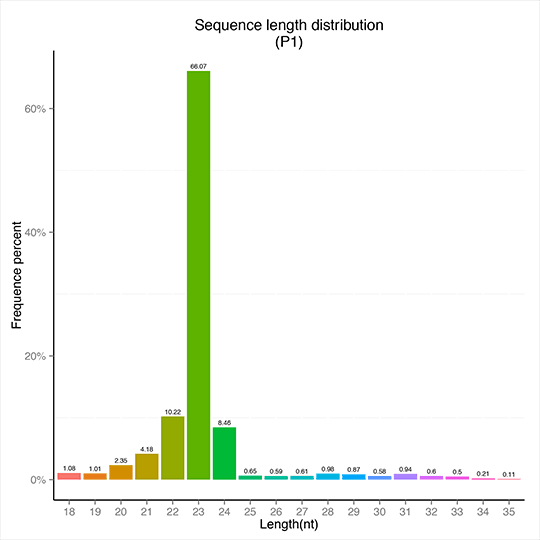
Length Distribution of Total small RNA

Small RNA molecules typically range from 18–40 nucleotides (nt). Examining their length distribution helps assess the composition of the small RNA population and provides insight into the relative abundance of different small RNA classes.

Image
Image
1/1
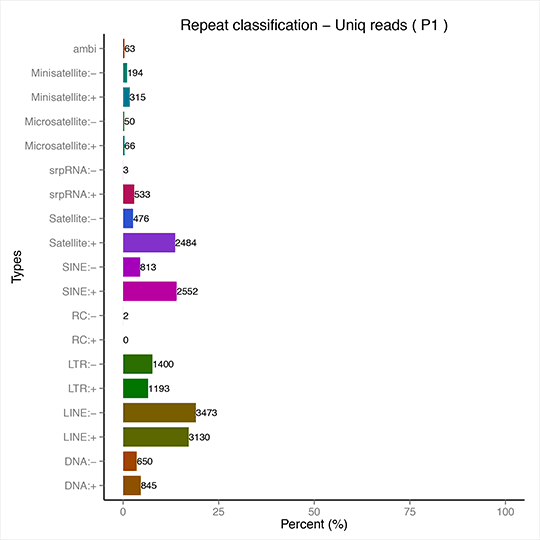
Repeat Sequence Alignment

Small RNAs are aligned to predicted repeat sequences, and reads originating from repetitive regions are filtered out. Summary statistics are then generated to show the distribution of repeat‑derived small RNAs and the total number of retained small RNAs.

Image
Image
1/1
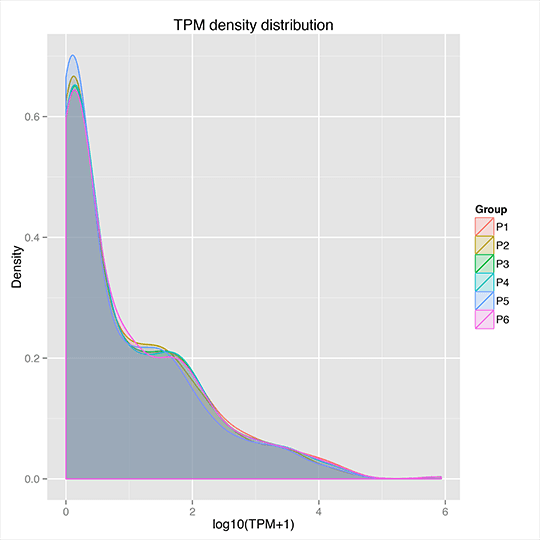
miRNA TPM Distribution

TPM-based density distribution illustrates miRNA expression patterns across samples. In the plot, the x-axis represents sample names, and the y-axis shows log10(TPM + 1) values for each miRNA.

Image
Image
1/1
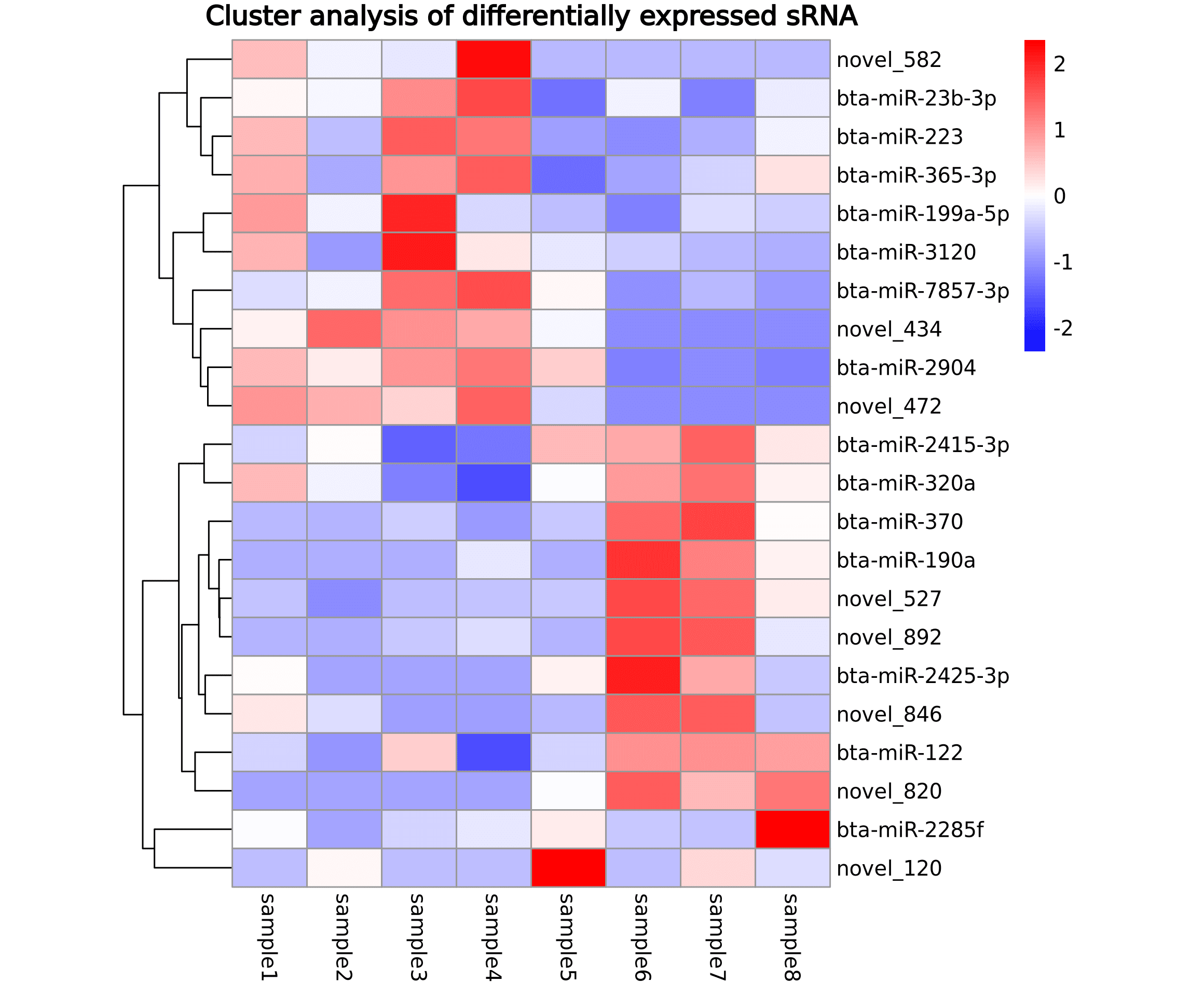
Cluster Analysis of Differentially Expressed miRNAs

Clustering analysis groups miRNAs with similar expression profiles, enabling the identification of shared expression patterns across different experimental conditions.

Image
Image
1/1
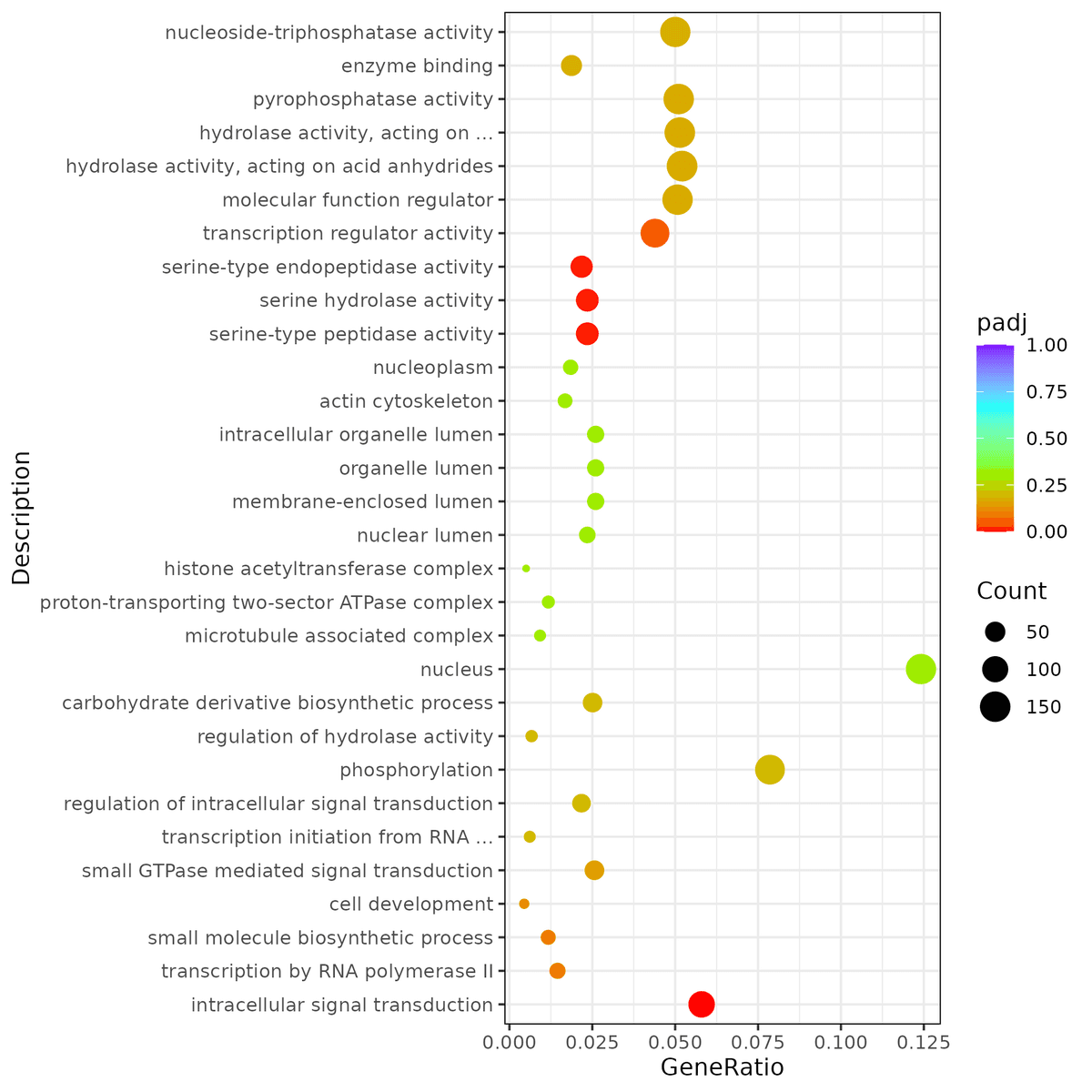
Scatter Plot of Target Gene Candidates

This plot visualizes enriched Gene Ontology (GO) terms associated with predicted miRNA target genes. The x-axis displays Gene Ontology (GO) terms, while the y-axis indicates their statistical significance.

Image
Image
1/1
Length Distribution of Total small RNA

Small RNA molecules typically range from 18–40 nucleotides (nt). Examining their length distribution helps assess the composition of the small RNA population and provides insight into the relative abundance of different small RNA classes.

Image
Image
1/1
Repeat Sequence Alignment

Small RNAs are aligned to predicted repeat sequences, and reads originating from repetitive regions are filtered out. Summary statistics are then generated to show the distribution of repeat‑derived small RNAs and the total number of retained small RNAs.

Image
Image
1/1
miRNA TPM Distribution

TPM-based density distribution illustrates miRNA expression patterns across samples. In the plot, the x-axis represents sample names, and the y-axis shows log10(TPM + 1) values for each miRNA.

Image
Image
1/1
Cluster Analysis of Differentially Expressed miRNAs

Clustering analysis groups miRNAs with similar expression profiles, enabling the identification of shared expression patterns across different experimental conditions.

Image
Image
1/1
Scatter Plot of Target Gene Candidates

This plot visualizes enriched Gene Ontology (GO) terms associated with predicted miRNA target genes. The x-axis displays Gene Ontology (GO) terms, while the y-axis indicates their statistical significance.

Demo Results

Image
Image
1/1
Length Distribution of Total small RNA

Small RNA molecules typically range from 18–40 nucleotides (nt). Examining their length distribution helps assess the composition of the small RNA population and provides insight into the relative abundance of different small RNA classes.

Image
Image
1/1
Repeat Sequence Alignment

Small RNAs are aligned to predicted repeat sequences, and reads originating from repetitive regions are filtered out. Summary statistics are then generated to show the distribution of repeat‑derived small RNAs and the total number of retained small RNAs.

Image
Image
1/1
miRNA TPM Distribution

TPM-based density distribution illustrates miRNA expression patterns across samples. In the plot, the x-axis represents sample names, and the y-axis shows log10(TPM + 1) values for each miRNA.

Image
Image
1/1
Cluster Analysis of Differentially Expressed miRNAs

Clustering analysis groups miRNAs with similar expression profiles, enabling the identification of shared expression patterns across different experimental conditions.

Image
Image
1/1
Scatter Plot of Target Gene Candidates

This plot visualizes enriched Gene Ontology (GO) terms associated with predicted miRNA target genes. The x-axis displays Gene Ontology (GO) terms, while the y-axis indicates their statistical significance.

Image
Image
1/1
Length Distribution of Total small RNA

Small RNA molecules typically range from 18–40 nucleotides (nt). Examining their length distribution helps assess the composition of the small RNA population and provides insight into the relative abundance of different small RNA classes.

Image
Image
1/1
Repeat Sequence Alignment

Small RNAs are aligned to predicted repeat sequences, and reads originating from repetitive regions are filtered out. Summary statistics are then generated to show the distribution of repeat‑derived small RNAs and the total number of retained small RNAs.

Image
Image
1/1
miRNA TPM Distribution

TPM-based density distribution illustrates miRNA expression patterns across samples. In the plot, the x-axis represents sample names, and the y-axis shows log10(TPM + 1) values for each miRNA.

Image
Image
1/1
Cluster Analysis of Differentially Expressed miRNAs

Clustering analysis groups miRNAs with similar expression profiles, enabling the identification of shared expression patterns across different experimental conditions.

Image
Image
1/1
Scatter Plot of Target Gene Candidates

This plot visualizes enriched Gene Ontology (GO) terms associated with predicted miRNA target genes. The x-axis displays Gene Ontology (GO) terms, while the y-axis indicates their statistical significance.

More Services

Total RNA Sequencing
(Total RNA Sequencing)
Total RNA Sequencing
(Total RNA Sequencing)
CircRNA Sequencing
(CircRNA Sequencing)
CircRNA Sequencing
(CircRNA Sequencing)
mRNA Sequencing
(mRNA Sequencing)
mRNA Sequencing
(mRNA Sequencing)

More Services

Total RNA Sequencing
(Total RNA Sequencing)
Total RNA Sequencing
(Total RNA Sequencing)
CircRNA Sequencing
(CircRNA Sequencing)
CircRNA Sequencing
(CircRNA Sequencing)
mRNA Sequencing
(mRNA Sequencing)
mRNA Sequencing
(mRNA Sequencing)
Background
Background

Ready to Start Your Project?

Our platform offers tailored solutions for

your unique experimental needs, ensuring a seamless experience from project design to data delivery.


Privacy PolicyCookie PolicyCareers
banner laptop bg
banner mobile bg

Small RNA Sequencing

Comprehensive profiling of small RNA species to reveal regulatory RNA populations and post-transcriptional gene regulatory mechanisms.
Request a Quote
(Small RNA Sequencing)
Request a Quote
(Small RNA Sequencing)
OverviewOverview
BenefitsBenefits
ApplicationsApplications
SpecificationsSpecifications
ResourcesResources

Small RNA sequencing (sRNA-seq) is a high-throughput next-generation sequencing (NGS) method used to identify, quantify, and characterize small RNA molecules, including miRNAs, siRNAs, piRNAs, and other regulatory RNAs. This approach enables both the detection of known small RNAs and the discovery of novel small RNA species, providing insights into their roles in gene regulation, development, stress response, and disease biology.

Novogene’s small RNA-seq service offers highly sensitive, high resolution profiling of diverse small RNA populations in a single assay. Supported by a robust in-house bioinformatics pipeline, the workflow enables accurate differential-expression analysis, discovery of novel small RNAs, evaluation of structural or sequence alterations, and comprehensive characterization of miRNA expression patterns across experimental conditions.

Benefits of Novogene Small RNA Sequencing

Small RNA sequencing (sRNA-seq) is a cutting-edge NGS technology that enables in-depth investigation of small RNAs, delivering valuable insights for both basic research and clinical applications.

Dual Sample Type Compatibility

It supports sequencing of small RNAs from both total RNA and exosomal RNA samples, enabling multi-dimensional exploration of small RNA dynamics in intracellular and extracellular environments.

Dual Sample Type Compatibility

It supports sequencing of small RNAs from both total RNA and exosomal RNA samples, enabling multi-dimensional exploration of small RNA dynamics in intracellular and extracellular environments.

Novel Molecule Discovery

It identifies previously unknown small RNA species, expanding the understanding of their identities and functional roles in biological processes.

Novel Molecule Discovery

It identifies previously unknown small RNA species, expanding the understanding of their identities and functional roles in biological processes.

Disease Association Analysis

It uncovers aberrant small-RNA expression patterns linked to cancers, neurological disorders, and other diseases, facilitating biomarker discovery and therapeutic target identification.

Disease Association Analysis

It uncovers aberrant small-RNA expression patterns linked to cancers, neurological disorders, and other diseases, facilitating biomarker discovery and therapeutic target identification.

Regulatory Mechanism Decoding

It elucidates post-transcriptional gene-regulation networks mediated by small RNAs, providing a comprehensive view of cellular molecular interactions.

Regulatory Mechanism Decoding

It elucidates post-transcriptional gene-regulation networks mediated by small RNAs, providing a comprehensive view of cellular molecular interactions.

Benefits of Novogene Small RNA Sequencing

Small RNA sequencing (sRNA-seq) is a cutting-edge NGS technology that enables in-depth investigation of small RNAs, delivering valuable insights for both basic research and clinical applications.

Dual Sample Type Compatibility

It supports sequencing of small RNAs from both total RNA and exosomal RNA samples, enabling multi-dimensional exploration of small RNA dynamics in intracellular and extracellular environments.

Dual Sample Type Compatibility

It supports sequencing of small RNAs from both total RNA and exosomal RNA samples, enabling multi-dimensional exploration of small RNA dynamics in intracellular and extracellular environments.

Novel Molecule Discovery

It identifies previously unknown small RNA species, expanding the understanding of their identities and functional roles in biological processes.

Novel Molecule Discovery

It identifies previously unknown small RNA species, expanding the understanding of their identities and functional roles in biological processes.

Disease Association Analysis

It uncovers aberrant small-RNA expression patterns linked to cancers, neurological disorders, and other diseases, facilitating biomarker discovery and therapeutic target identification.

Disease Association Analysis

It uncovers aberrant small-RNA expression patterns linked to cancers, neurological disorders, and other diseases, facilitating biomarker discovery and therapeutic target identification.

Regulatory Mechanism Decoding

It elucidates post-transcriptional gene-regulation networks mediated by small RNAs, providing a comprehensive view of cellular molecular interactions.

Regulatory Mechanism Decoding

It elucidates post-transcriptional gene-regulation networks mediated by small RNAs, providing a comprehensive view of cellular molecular interactions.

Applications of Small RNA Sequencing

Small RNA-seq has been unlocking remarkable research opportunities and clinical potentials, including:

Precise profiling

Quantifying known small RNAs (e.g., miRNAs and siRNAs) and discovering novel small RNA molecules.

Precise profiling

Quantifying known small RNAs (e.g., miRNAs and siRNAs) and discovering novel small RNA molecules.

Disease biomarker discovery

Identifying diagnostic and prognostic biomarkers for cancers, metabolic disorders, and infectious diseases.

Disease biomarker discovery

Identifying diagnostic and prognostic biomarkers for cancers, metabolic disorders, and infectious diseases.

Regulatory mechanism elucidation

Unraveling post-transcriptional gene regulation pathways mediated by small RNAs.

Regulatory mechanism elucidation

Unraveling post-transcriptional gene regulation pathways mediated by small RNAs.

Therapeutic target exploration

Predicting and validating small RNA targets for drug development and personalized medicine.

Therapeutic target exploration

Predicting and validating small RNA targets for drug development and personalized medicine.

Applications of Small RNA Sequencing

Small RNA-seq has been unlocking remarkable research opportunities and clinical potentials, including:

Precise profiling

Quantifying known small RNAs (e.g., miRNAs and siRNAs) and discovering novel small RNA molecules.

Precise profiling

Quantifying known small RNAs (e.g., miRNAs and siRNAs) and discovering novel small RNA molecules.

Disease biomarker discovery

Identifying diagnostic and prognostic biomarkers for cancers, metabolic disorders, and infectious diseases.

Disease biomarker discovery

Identifying diagnostic and prognostic biomarkers for cancers, metabolic disorders, and infectious diseases.

Regulatory mechanism elucidation

Unraveling post-transcriptional gene regulation pathways mediated by small RNAs.

Regulatory mechanism elucidation

Unraveling post-transcriptional gene regulation pathways mediated by small RNAs.

Therapeutic target exploration

Predicting and validating small RNA targets for drug development and personalized medicine.

Therapeutic target exploration

Predicting and validating small RNA targets for drug development and personalized medicine.

Specifications

Sample Requirements

Sample amounts are listed for reference only. Download the Sample Requirements to learn more. For detailed information, please contact us with your customized requests.

Library TypeSample TypeAmountRNA Integrity Number (Agilent 5400)Purity (NanoDrop)
Small RNA LibraryTotal RNA≥ 1.5 μg≥6.5, with flat baselineOD260/280≥ 2.0;
OD260/230≥ 2.0;
no degradation, no contamination
Exosomal Small RNA LibraryExosomal RNA≥ 20 ngFragments between
25-200nt, FU>10

Sample Requirements

Sample amounts are listed for reference only. Download the Sample Requirements to learn more. For detailed information, please contact us with your customized requests.

Library TypeSample TypeAmountRNA Integrity Number (Agilent 5400)Purity (NanoDrop)
Small RNA LibraryTotal RNA≥ 1.5 μg≥6.5, with flat baselineOD260/280≥ 2.0;
OD260/230≥ 2.0;
no degradation, no contamination
Exosomal Small RNA LibraryExosomal RNA≥ 20 ngFragments between
25-200nt, FU>10

Sample Requirements

Sample amounts are listed for reference only. Download the Sample Requirements to learn more. For detailed information, please contact us with your customized requests.

Library TypeSample TypeAmountRNA Integrity Number (Agilent 5400)Purity (NanoDrop)
Small RNA LibraryTotal RNA≥ 1.5 μg≥6.5, with flat baselineOD260/280≥ 2.0;
OD260/230≥ 2.0;
no degradation, no contamination
Exosomal Small RNA LibraryExosomal RNA≥ 20 ngFragments between
25-200nt, FU>10

Sample Requirements

Sample amounts are listed for reference only. Download the Sample Requirements to learn more. For detailed information, please contact us with your customized requests.

Library TypeSample TypeAmountRNA Integrity Number (Agilent 5400)Purity (NanoDrop)
Small RNA LibraryTotal RNA≥ 1.5 μg≥6.5, with flat baselineOD260/280≥ 2.0;
OD260/230≥ 2.0;
no degradation, no contamination
Exosomal Small RNA LibraryExosomal RNA≥ 20 ngFragments between
25-200nt, FU>10

Sequencing and Analysis

Recommended data outputs and analysis contents displayed are for reference only. For detailed information, please contact us with your customized requests.

Sequencing PlatformIllumina NovaSeq System
Read LengthSingle-end 50 bp
Recommended Sequencing Depth≥ 10 million read pair per sample
Standard Analysis (miRNA)Data Quality Control
Summary of Length Distribution
Common & Specific Sequence Summary
Identification & Characterization of miRNAs
Classification & Annotation of miRNA
Quantification & Differential Expression Analysis
Functional Enrichment Analysis

Project Workflow

The workflow of the small RNA-seq starts with sample preparation and quality control.


Total RNA was used as input material for the RNA sample preparations. Briefly, 3′ and 5′ adapters are ligated to 3′ and 5′ ends of small RNAs, respectively. Then the first-strand cDNA is synthesized after hybridization with reverse-transcription primer. The double-stranded cDNA library is generated through PCR enrichment, and the sequencing is performed on the Illumina sequencing platform. The downstream processing follows the well-established bioinformatics pipeline, which guarantees the highest quality results. Customized bioinformatics solutions are available upon request.

Project Workflow

Sequencing and Analysis

Recommended data outputs and analysis contents displayed are for reference only. For detailed information, please contact us with your customized requests.

Sequencing PlatformIllumina NovaSeq System
Read LengthSingle-end 50 bp
Recommended Sequencing Depth≥ 10 million read pair per sample
Standard Analysis (miRNA)Data Quality Control
Summary of Length Distribution
Common & Specific Sequence Summary
Identification & Characterization of miRNAs
Classification & Annotation of miRNA
Quantification & Differential Expression Analysis
Functional Enrichment Analysis

Project Workflow

The workflow of the small RNA-seq starts with sample preparation and quality control.


Total RNA was used as input material for the RNA sample preparations. Briefly, 3′ and 5′ adapters are ligated to 3′ and 5′ ends of small RNAs, respectively. Then the first-strand cDNA is synthesized after hybridization with reverse-transcription primer. The double-stranded cDNA library is generated through PCR enrichment, and the sequencing is performed on the Illumina sequencing platform. The downstream processing follows the well-established bioinformatics pipeline, which guarantees the highest quality results. Customized bioinformatics solutions are available upon request.

Project Workflow

Sequencing and Analysis

Recommended data outputs and analysis contents displayed are for reference only. For detailed information, please contact us with your customized requests.

Sequencing PlatformIllumina NovaSeq System
Read LengthSingle-end 50 bp
Recommended Sequencing Depth≥ 10 million read pair per sample
Standard Analysis (miRNA)Data Quality Control
Summary of Length Distribution
Common & Specific Sequence Summary
Identification & Characterization of miRNAs
Classification & Annotation of miRNA
Quantification & Differential Expression Analysis
Functional Enrichment Analysis

Project Workflow

The workflow of the small RNA-seq starts with sample preparation and quality control.


Total RNA was used as input material for the RNA sample preparations. Briefly, 3′ and 5′ adapters are ligated to 3′ and 5′ ends of small RNAs, respectively. Then the first-strand cDNA is synthesized after hybridization with reverse-transcription primer. The double-stranded cDNA library is generated through PCR enrichment, and the sequencing is performed on the Illumina sequencing platform. The downstream processing follows the well-established bioinformatics pipeline, which guarantees the highest quality results. Customized bioinformatics solutions are available upon request.

Project Workflow

Sequencing and Analysis

Recommended data outputs and analysis contents displayed are for reference only. For detailed information, please contact us with your customized requests.

Sequencing PlatformIllumina NovaSeq System
Read LengthSingle-end 50 bp
Recommended Sequencing Depth≥ 10 million read pair per sample
Standard Analysis (miRNA)Data Quality Control
Summary of Length Distribution
Common & Specific Sequence Summary
Identification & Characterization of miRNAs
Classification & Annotation of miRNA
Quantification & Differential Expression Analysis
Functional Enrichment Analysis

Project Workflow

The workflow of the small RNA-seq starts with sample preparation and quality control.


Total RNA was used as input material for the RNA sample preparations. Briefly, 3′ and 5′ adapters are ligated to 3′ and 5′ ends of small RNAs, respectively. Then the first-strand cDNA is synthesized after hybridization with reverse-transcription primer. The double-stranded cDNA library is generated through PCR enrichment, and the sequencing is performed on the Illumina sequencing platform. The downstream processing follows the well-established bioinformatics pipeline, which guarantees the highest quality results. Customized bioinformatics solutions are available upon request.

Project Workflow

Specifications

Sample Requirements

Sample amounts are listed for reference only. Download the Sample Requirements to learn more. For detailed information, please contact us with your customized requests.

Library TypeSample TypeAmountRNA Integrity Number (Agilent 5400)Purity (NanoDrop)
Small RNA LibraryTotal RNA≥ 1.5 μg≥6.5, with flat baselineOD260/280≥ 2.0;
OD260/230≥ 2.0;
no degradation, no contamination
Exosomal Small RNA LibraryExosomal RNA≥ 20 ngFragments between
25-200nt, FU>10

Sample Requirements

Sample amounts are listed for reference only. Download the Sample Requirements to learn more. For detailed information, please contact us with your customized requests.

Library TypeSample TypeAmountRNA Integrity Number (Agilent 5400)Purity (NanoDrop)
Small RNA LibraryTotal RNA≥ 1.5 μg≥6.5, with flat baselineOD260/280≥ 2.0;
OD260/230≥ 2.0;
no degradation, no contamination
Exosomal Small RNA LibraryExosomal RNA≥ 20 ngFragments between
25-200nt, FU>10

Sample Requirements

Sample amounts are listed for reference only. Download the Sample Requirements to learn more. For detailed information, please contact us with your customized requests.

Library TypeSample TypeAmountRNA Integrity Number (Agilent 5400)Purity (NanoDrop)
Small RNA LibraryTotal RNA≥ 1.5 μg≥6.5, with flat baselineOD260/280≥ 2.0;
OD260/230≥ 2.0;
no degradation, no contamination
Exosomal Small RNA LibraryExosomal RNA≥ 20 ngFragments between
25-200nt, FU>10

Sample Requirements

Sample amounts are listed for reference only. Download the Sample Requirements to learn more. For detailed information, please contact us with your customized requests.

Library TypeSample TypeAmountRNA Integrity Number (Agilent 5400)Purity (NanoDrop)
Small RNA LibraryTotal RNA≥ 1.5 μg≥6.5, with flat baselineOD260/280≥ 2.0;
OD260/230≥ 2.0;
no degradation, no contamination
Exosomal Small RNA LibraryExosomal RNA≥ 20 ngFragments between
25-200nt, FU>10

Sequencing and Analysis

Recommended data outputs and analysis contents displayed are for reference only. For detailed information, please contact us with your customized requests.

Sequencing PlatformIllumina NovaSeq System
Read LengthSingle-end 50 bp
Recommended Sequencing Depth≥ 10 million read pair per sample
Standard Analysis (miRNA)Data Quality Control
Summary of Length Distribution
Common & Specific Sequence Summary
Identification & Characterization of miRNAs
Classification & Annotation of miRNA
Quantification & Differential Expression Analysis
Functional Enrichment Analysis

Project Workflow

The workflow of the small RNA-seq starts with sample preparation and quality control.


Total RNA was used as input material for the RNA sample preparations. Briefly, 3′ and 5′ adapters are ligated to 3′ and 5′ ends of small RNAs, respectively. Then the first-strand cDNA is synthesized after hybridization with reverse-transcription primer. The double-stranded cDNA library is generated through PCR enrichment, and the sequencing is performed on the Illumina sequencing platform. The downstream processing follows the well-established bioinformatics pipeline, which guarantees the highest quality results. Customized bioinformatics solutions are available upon request.

Project Workflow

Sequencing and Analysis

Recommended data outputs and analysis contents displayed are for reference only. For detailed information, please contact us with your customized requests.

Sequencing PlatformIllumina NovaSeq System
Read LengthSingle-end 50 bp
Recommended Sequencing Depth≥ 10 million read pair per sample
Standard Analysis (miRNA)Data Quality Control
Summary of Length Distribution
Common & Specific Sequence Summary
Identification & Characterization of miRNAs
Classification & Annotation of miRNA
Quantification & Differential Expression Analysis
Functional Enrichment Analysis

Project Workflow

The workflow of the small RNA-seq starts with sample preparation and quality control.


Total RNA was used as input material for the RNA sample preparations. Briefly, 3′ and 5′ adapters are ligated to 3′ and 5′ ends of small RNAs, respectively. Then the first-strand cDNA is synthesized after hybridization with reverse-transcription primer. The double-stranded cDNA library is generated through PCR enrichment, and the sequencing is performed on the Illumina sequencing platform. The downstream processing follows the well-established bioinformatics pipeline, which guarantees the highest quality results. Customized bioinformatics solutions are available upon request.

Project Workflow

Sequencing and Analysis

Recommended data outputs and analysis contents displayed are for reference only. For detailed information, please contact us with your customized requests.

Sequencing PlatformIllumina NovaSeq System
Read LengthSingle-end 50 bp
Recommended Sequencing Depth≥ 10 million read pair per sample
Standard Analysis (miRNA)Data Quality Control
Summary of Length Distribution
Common & Specific Sequence Summary
Identification & Characterization of miRNAs
Classification & Annotation of miRNA
Quantification & Differential Expression Analysis
Functional Enrichment Analysis

Project Workflow

The workflow of the small RNA-seq starts with sample preparation and quality control.


Total RNA was used as input material for the RNA sample preparations. Briefly, 3′ and 5′ adapters are ligated to 3′ and 5′ ends of small RNAs, respectively. Then the first-strand cDNA is synthesized after hybridization with reverse-transcription primer. The double-stranded cDNA library is generated through PCR enrichment, and the sequencing is performed on the Illumina sequencing platform. The downstream processing follows the well-established bioinformatics pipeline, which guarantees the highest quality results. Customized bioinformatics solutions are available upon request.

Project Workflow

Sequencing and Analysis

Recommended data outputs and analysis contents displayed are for reference only. For detailed information, please contact us with your customized requests.

Sequencing PlatformIllumina NovaSeq System
Read LengthSingle-end 50 bp
Recommended Sequencing Depth≥ 10 million read pair per sample
Standard Analysis (miRNA)Data Quality Control
Summary of Length Distribution
Common & Specific Sequence Summary
Identification & Characterization of miRNAs
Classification & Annotation of miRNA
Quantification & Differential Expression Analysis
Functional Enrichment Analysis

Project Workflow

The workflow of the small RNA-seq starts with sample preparation and quality control.


Total RNA was used as input material for the RNA sample preparations. Briefly, 3′ and 5′ adapters are ligated to 3′ and 5′ ends of small RNAs, respectively. Then the first-strand cDNA is synthesized after hybridization with reverse-transcription primer. The double-stranded cDNA library is generated through PCR enrichment, and the sequencing is performed on the Illumina sequencing platform. The downstream processing follows the well-established bioinformatics pipeline, which guarantees the highest quality results. Customized bioinformatics solutions are available upon request.

Project Workflow

Demo Results

Image
Image
1/1
Length Distribution of Total small RNA

Small RNA molecules typically range from 18–40 nucleotides (nt). Examining their length distribution helps assess the composition of the small RNA population and provides insight into the relative abundance of different small RNA classes.

Image
Image
1/1
Repeat Sequence Alignment

Small RNAs are aligned to predicted repeat sequences, and reads originating from repetitive regions are filtered out. Summary statistics are then generated to show the distribution of repeat‑derived small RNAs and the total number of retained small RNAs.

Image
Image
1/1
miRNA TPM Distribution

TPM-based density distribution illustrates miRNA expression patterns across samples. In the plot, the x-axis represents sample names, and the y-axis shows log10(TPM + 1) values for each miRNA.

Image
Image
1/1
Cluster Analysis of Differentially Expressed miRNAs

Clustering analysis groups miRNAs with similar expression profiles, enabling the identification of shared expression patterns across different experimental conditions.

Image
Image
1/1
Scatter Plot of Target Gene Candidates

This plot visualizes enriched Gene Ontology (GO) terms associated with predicted miRNA target genes. The x-axis displays Gene Ontology (GO) terms, while the y-axis indicates their statistical significance.

Image
Image
1/1
Length Distribution of Total small RNA

Small RNA molecules typically range from 18–40 nucleotides (nt). Examining their length distribution helps assess the composition of the small RNA population and provides insight into the relative abundance of different small RNA classes.

Image
Image
1/1
Repeat Sequence Alignment

Small RNAs are aligned to predicted repeat sequences, and reads originating from repetitive regions are filtered out. Summary statistics are then generated to show the distribution of repeat‑derived small RNAs and the total number of retained small RNAs.

Image
Image
1/1
miRNA TPM Distribution

TPM-based density distribution illustrates miRNA expression patterns across samples. In the plot, the x-axis represents sample names, and the y-axis shows log10(TPM + 1) values for each miRNA.

Image
Image
1/1
Cluster Analysis of Differentially Expressed miRNAs

Clustering analysis groups miRNAs with similar expression profiles, enabling the identification of shared expression patterns across different experimental conditions.

Image
Image
1/1
Scatter Plot of Target Gene Candidates

This plot visualizes enriched Gene Ontology (GO) terms associated with predicted miRNA target genes. The x-axis displays Gene Ontology (GO) terms, while the y-axis indicates their statistical significance.

Demo Results

Image
Image
1/1
Length Distribution of Total small RNA

Small RNA molecules typically range from 18–40 nucleotides (nt). Examining their length distribution helps assess the composition of the small RNA population and provides insight into the relative abundance of different small RNA classes.

Image
Image
1/1
Repeat Sequence Alignment

Small RNAs are aligned to predicted repeat sequences, and reads originating from repetitive regions are filtered out. Summary statistics are then generated to show the distribution of repeat‑derived small RNAs and the total number of retained small RNAs.

Image
Image
1/1
miRNA TPM Distribution

TPM-based density distribution illustrates miRNA expression patterns across samples. In the plot, the x-axis represents sample names, and the y-axis shows log10(TPM + 1) values for each miRNA.

Image
Image
1/1
Cluster Analysis of Differentially Expressed miRNAs

Clustering analysis groups miRNAs with similar expression profiles, enabling the identification of shared expression patterns across different experimental conditions.

Image
Image
1/1
Scatter Plot of Target Gene Candidates

This plot visualizes enriched Gene Ontology (GO) terms associated with predicted miRNA target genes. The x-axis displays Gene Ontology (GO) terms, while the y-axis indicates their statistical significance.

Image
Image
1/1
Length Distribution of Total small RNA

Small RNA molecules typically range from 18–40 nucleotides (nt). Examining their length distribution helps assess the composition of the small RNA population and provides insight into the relative abundance of different small RNA classes.

Image
Image
1/1
Repeat Sequence Alignment

Small RNAs are aligned to predicted repeat sequences, and reads originating from repetitive regions are filtered out. Summary statistics are then generated to show the distribution of repeat‑derived small RNAs and the total number of retained small RNAs.

Image
Image
1/1
miRNA TPM Distribution

TPM-based density distribution illustrates miRNA expression patterns across samples. In the plot, the x-axis represents sample names, and the y-axis shows log10(TPM + 1) values for each miRNA.

Image
Image
1/1
Cluster Analysis of Differentially Expressed miRNAs

Clustering analysis groups miRNAs with similar expression profiles, enabling the identification of shared expression patterns across different experimental conditions.

Image
Image
1/1
Scatter Plot of Target Gene Candidates

This plot visualizes enriched Gene Ontology (GO) terms associated with predicted miRNA target genes. The x-axis displays Gene Ontology (GO) terms, while the y-axis indicates their statistical significance.

More Services

Total RNA Sequencing
(Total RNA Sequencing)
Total RNA Sequencing
(Total RNA Sequencing)
CircRNA Sequencing
(CircRNA Sequencing)
CircRNA Sequencing
(CircRNA Sequencing)
mRNA Sequencing
(mRNA Sequencing)
mRNA Sequencing
(mRNA Sequencing)

More Services

Total RNA Sequencing
(Total RNA Sequencing)
Total RNA Sequencing
(Total RNA Sequencing)
CircRNA Sequencing
(CircRNA Sequencing)
CircRNA Sequencing
(CircRNA Sequencing)
mRNA Sequencing
(mRNA Sequencing)
mRNA Sequencing
(mRNA Sequencing)
Background
Background

Ready to Start Your Project?

Our platform offers tailored solutions for

your unique experimental needs, ensuring a seamless experience from project design to data delivery.


Privacy PolicyCookie PolicyCareers